

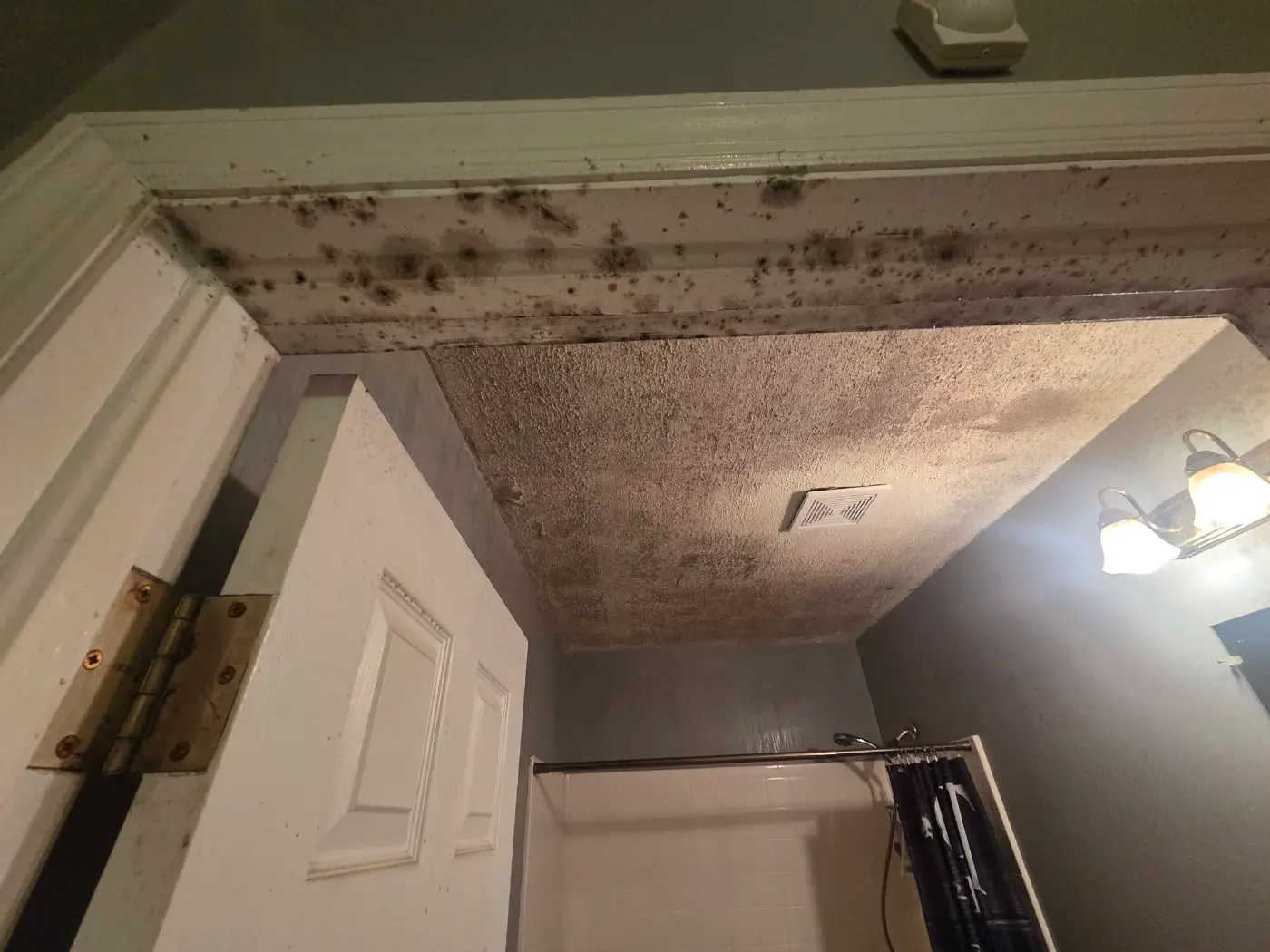
What is attic mold removal?
Attic mold removal is the cleaning and treatment of mold growing on roof sheathing, rafters and trusses, and sometimes insulation, combined with correcting the ventilation, air leaks and moisture sources that allowed it to grow. Attic mold most often appears as dark staining or fuzzy growth on the plywood or OSB under the roof, usually on the north-facing side or near bathroom fan outlets.
Unlike basement mold, attic mold is rarely caused by water coming in from outside. It is usually caused by warm, moist air from the living space rising into a cold attic and condensing on the underside of the roof.
What causes attic mold?
- Bathroom fans venting into the attic. One of the most common causes. Every shower sends warm, wet air straight onto the sheathing.
- Dryer vents and kitchen exhausts that end in the attic instead of outside.
- Blocked soffit vents. Insulation pushed against the eaves stops fresh air from flowing through the attic.
- Air leaks from the living space. Gaps around light fixtures, attic hatches, plumbing stacks and chimneys let warm, humid air in.
- Roof leaks. Failed flashing, damaged shingles or ice dams let water in, often in one spot.
- Not enough ventilation. Attics need balanced intake (soffit) and exhaust (ridge or roof) vents to stay dry.
Signs of attic mold
- Dark gray or black staining on roof sheathing, often in a pattern between rafters
- Frost on the underside of the roof in winter
- Damp or matted insulation
- A musty smell near the attic hatch or in upstairs closets
- Rusty nail tips poking through the sheathing
- Higher than normal heating and cooling costs
How attic mold removal works
- InspectThe extent of growth, the condition of the sheathing, insulation and vents, and the moisture source are assessed.
- ContainThe attic hatch and openings to the living space are sealed off, and air filtration runs during the work.
- Remove damaged insulationWet or moldy insulation is removed when needed.
- Clean the sheathing and framingMold is removed by HEPA vacuuming, scrubbing, sanding, or soda or dry-ice blasting.
- Treat and sealAn antimicrobial and, often, an encapsulating coating are applied to the cleaned wood.
- Fix the causeBath fans and dryer vents are rerouted outside, soffit vents cleared with baffles, air leaks sealed and ventilation balanced.
Fixing the cause matters most
Cleaning attic mold without fixing the ventilation is a waste of money; it will return within a season or two. The most common fixes are:
| Problem | Fix |
|---|---|
| Bath fan venting into attic | Duct it through the roof or a gable wall with an insulated duct |
| Blocked soffit vents | Install baffles to keep insulation clear of the eaves |
| Air leaks from the house | Seal around fixtures, the attic hatch and plumbing and wiring penetrations |
| Too little exhaust | Add ridge or roof vents to balance intake |
| Roof leak | Repair flashing, shingles or the damaged section |
Check where your bath fan goesIf you can see the bathroom fan duct ending in the attic insulation rather than at a roof or wall vent, that is a likely cause of attic mold.
Attic mold in older Charleston homes
Older homes often have little attic ventilation by modern standards, and many had bathroom fans added later that were never ducted outside. Hillside homes and those shaded by large trees, common in South Hills, the East End and parts of the West Side, can see more condensation on the north-facing roof. Attic mold removal is part of mold removal, and a mold inspection is the best way to find the cause. For water, fire and mold damage anywhere in the county, see property damage restoration in Kanawha County.
Call Kanawha Restoration for attic mold removal.
Attic mold removal FAQs
Does attic mold affect the air in my home?
It can. Air from the attic can leak into the living space through gaps around fixtures and the attic hatch, especially in winter.
Does roof sheathing with mold need to be replaced?
Usually not. Most attic mold is on the surface and can be cleaned. Sheathing that is soft, delaminated or rotted from long-term moisture needs to be replaced.
Can I just spray the attic mold?
Sprays alone do not remove mold, and they do nothing about the ventilation problem that caused it. The mold has to be physically removed and the cause fixed.
Is attic mold a problem when selling a house?
It often shows up in home inspections. Having it removed, with the cause fixed and documented, makes it much less of an issue for buyers.