

What is basement mold removal?
Basement mold removal is the containment and removal of mold growth from basement walls, framing, drywall, flooring and stored belongings, followed by cleaning, drying and correcting the moisture conditions that caused it. It covers unfinished basements with concrete and block, finished basements with drywall, carpet and paneling, and everything stored down there.
Removing visible mold is only half the job. If the basement stays damp, mold comes back within months. Lasting basement mold removal always includes moisture control.
Why basements in Charleston grow mold
- Damp foundation walls. Block and poured concrete walls absorb water from saturated soil, especially on hillside lots where runoff collects against the foundation.
- Past flooding. Basements that flooded and were not properly dried often have mold behind paneling, under carpet and inside wall cavities. See mold after flooding.
- Summer humidity. Warm, humid valley air condenses on cool basement walls, pipes and ductwork.
- Finished basements over concrete. Carpet, pad and drywall placed directly against concrete trap moisture.
- Plumbing leaks and sump problems. Slow leaks from water heaters, washing machines and supply lines go unnoticed in basements.
- Stored items. Cardboard boxes, old furniture, books and clothing stored against walls or on the floor feed mold.
Signs of basement mold
- Musty smell when you open the basement door
- White, gray, green or black spots on walls, joists or stored items
- White, crystal-like deposits on block walls (efflorescence), which signal moisture moving through the wall, though they are not mold themselves
- Peeling paint or bubbling on basement walls
- Damp carpet or a smell that gets worse after rain
How basement mold removal works
- Inspect and find the moistureThe extent of growth is mapped and the moisture source identified, whether it is seepage, condensation, a leak or past flooding.
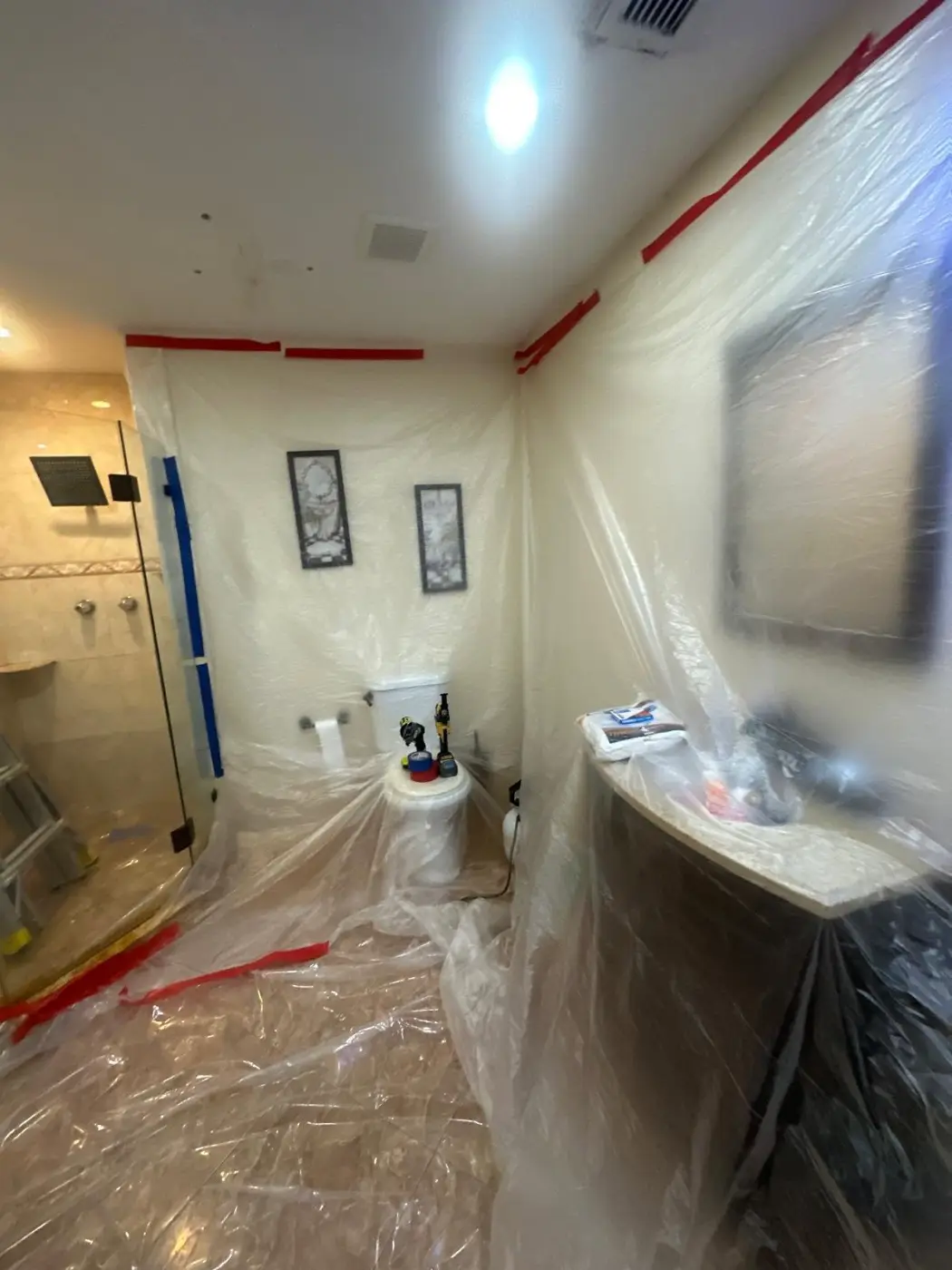
- Contain the areaThe basement is sealed off from the rest of the house with plastic sheeting, and negative air pressure keeps spores from moving upstairs.
- Remove affected materialsMoldy drywall, insulation, carpet, pad and paneling are removed and bagged.
- Clean surfacesFraming, concrete and block are HEPA-vacuumed, scrubbed and wiped; wood may be sanded or blasted.
- Dry and treatThe basement is dried with dehumidifiers, and an antimicrobial may be applied.
- Fix the moistureRecommendations or work to control water: gutters and grading, sump pump, interior drainage, a permanent dehumidifier.
Finished vs. unfinished basements
In an unfinished basement, mold is usually on the surface of block, concrete, joists and stored items, and it can often be cleaned without much removal. In a finished basement, mold is often hidden: on the back of drywall, inside wall cavities, under carpet pad and behind paneling. Finished basements usually need more demolition to reach it.
Keeping basement mold from coming back
- Run a dehumidifier to keep humidity between 30 and 50 percent, especially in summer.
- Keep gutters clear and extend downspouts away from the foundation.
- Grade soil so it slopes away from the house.
- Test your sump pump each spring.
- Store belongings in plastic bins, off the floor and away from walls.
- When finishing a basement, use moisture-resistant materials and leave a gap between drywall and the floor.
Efflorescence is a warning signWhite, powdery deposits on basement walls are mineral salts left by water passing through the masonry. They mean the wall is getting wet, even if it looks dry now.
Help across Charleston
Basement mold is common in hillside neighborhoods like South Hills, Spring Hill and the West Side, and in flood-prone areas like Kanawha City. Basement mold removal is part of mold removal, and it often follows flooded basement cleanup. If you are not sure how far it goes, start with a mold inspection. For water, fire and mold damage anywhere in the area, see local restoration help in Charleston.
Call Kanawha Restoration for basement mold removal.
Basement mold removal FAQs
Can I clean basement mold with bleach?
Bleach can lighten mold on hard, non-porous surfaces but does not penetrate drywall, wood or concrete, and it does nothing about the moisture. For small areas, detergent and water work; large areas need containment and professional removal.
Does finished basement drywall have to come out?
If mold is growing on or behind it, usually yes for the affected sections. Drywall is porous, and mold growing in it cannot be reliably cleaned.
How long does basement mold removal take?
A small area can be done in a day or two. A full finished basement with demolition and drying can take several days.
Will a dehumidifier stop basement mold?
It helps prevent new growth by keeping humidity low, but it does not remove existing mold or fix water coming through the walls.