

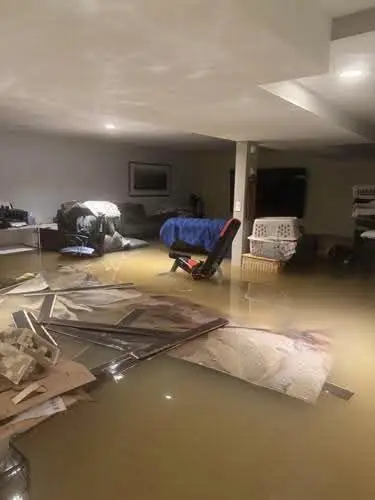
What does flooded basement cleanup involve?
Flooded basement cleanup is pumping water out of a basement, removing wet materials that cannot be dried, cleaning and disinfecting where needed, and drying the concrete, block walls and framing back to normal moisture levels. It covers everything from an inch of water across an unfinished floor to a finished basement with carpet, drywall and furniture underwater.
Basements are harder to dry than upper floors. They are below ground, cool and damp to begin with, and concrete and block hold a lot of water. Without dehumidifiers, a basement can stay damp for weeks after the water is gone.
Why do Charleston basements flood?
- Hillside runoff. On sloped lots in South Hills, Spring Hill, the West Side and Cross Lanes, heavy rain runs toward the house and saturates the soil against foundation walls.
- High groundwater near the rivers. Homes on the flat ground near the Kanawha and Elk rivers can see water push up through floor cracks when groundwater rises.
- River and creek flooding. When rivers and creeks overflow, water comes in through windows, doors and floor drains. That is storm and flood damage, and it is contaminated.
- Sump pump failures. Power outages during storms, a stuck float switch or an undersized pump can let water rise fast.
- Sewer backups. Heavy rain can overload sewer lines and push sewage up through basement floor drains.
- Plumbing and appliance failures. Water heaters, washing machines and supply lines in the basement fail without warning.
How does flooded basement cleanup work?
- Safety checkPower to the basement is checked and shut off if outlets or wiring are wet. Gas appliances are inspected if water reached them.
- Pump out standing waterSubmersible pumps remove deep water. Extractors take care of carpet and the last inch on the floor.
- Remove wet materialsCarpet pad, wet drywall (usually cut 12 to 24 inches above the waterline), insulation and swollen trim are removed.
- Clean and disinfectAfter sewage or floodwater, all affected surfaces are cleaned and treated with an antimicrobial.
- Dry the spaceAir movers and large dehumidifiers dry concrete, block, framing and anything left in place.
- Confirm with readingsMoisture readings on walls, floors and framing confirm the basement is dry before anything is rebuilt.
Finished vs. unfinished basements
| Unfinished basement | Finished basement | |
|---|---|---|
| What usually goes | Stored items, cardboard boxes | Carpet pad, often carpet, lower drywall, insulation, baseboards |
| Drying time | Often 2 to 4 days | Often 4 to 7 days |
| Mold risk | Moderate; concrete and block | Higher; drywall, wood and carpet hold moisture |
| Main challenge | Concrete and block hold water | Water hides behind walls and under flooring |
In a finished basement, the hidden spaces matter most: behind paneling, inside wall cavities and under laminate or vinyl plank flooring. Moisture left there is the main cause of basement mold weeks later.
What to do right away
- Do not go into a flooded basement if water is near outlets, the electrical panel or appliances. Call the power company if you cannot safely shut off power.
- Stop the source if it is a pipe or appliance: shut off the water main.
- Check the sump pump. If it is not running, check whether it has power and whether the float is stuck.
- Move stored items to a dry area if it is safe to walk in.
- Photograph everything, including the water line on walls.
Treat floodwater and sewage as contaminatedWear rubber boots and gloves, keep children and pets out, and wash thoroughly after any contact.
How to keep the basement from flooding again
- Keep gutters clean and extend downspouts several feet from the foundation.
- Grade soil so it slopes away from the house.
- Test the sump pump every spring and consider a battery backup; see how to reduce the risk of basement moisture.
- Install a backwater valve if sewer backups have happened before.
- Run a dehumidifier in summer to keep basement humidity under 50 percent.
Flooded basement help across Charleston
Basement calls come from all over the valley, from older homes in the East End and North Charleston to newer subdivisions in Cross Lanes and hillside lots in South Hills. Flooded basement cleanup is one part of water damage restoration, and the starting point for any of it is often emergency water removal. For water, fire and mold help anywhere in town, see Charleston damage restoration.
Call Kanawha Restoration for pumping and drying.
Flooded basement FAQs
How long does it take to dry a flooded basement?
Usually three to five days for an unfinished basement and four to seven for a finished one, once the water is out. Concrete, block and longer flooding can take more time. Moisture readings decide when drying is done.
Does drywall have to come out after a basement flood?
Drywall that wicked clean water may be dried in place if caught quickly. After floodwater or sewage, or if water sat for more than a day or two, the lower section is usually cut out, often 12 to 24 inches above the waterline.
Can I just run fans in my basement?
Fans alone move damp air around a cool basement without removing the moisture. Dehumidifiers are needed to actually pull water out of the air, concrete and framing.
Will mold grow after my basement floods?
It can start within 24 to 48 hours on wet drywall, wood and carpet. Fast extraction and proper drying are the best way to prevent it.