

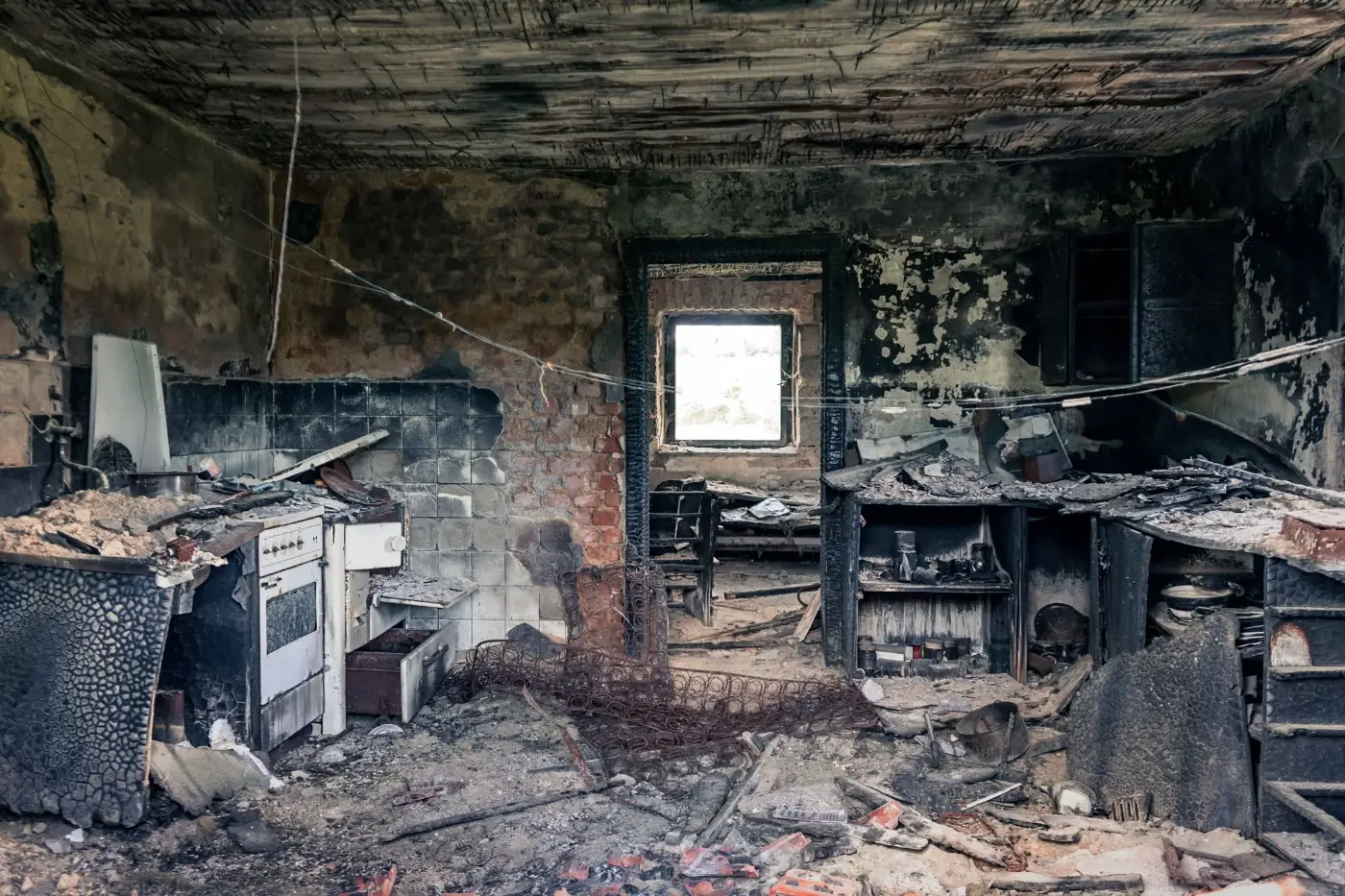
What makes kitchen fire cleanup different?
Kitchen fire cleanup is the removal of grease and protein smoke residue, soot and odor after a cooking fire, along with cleaning cabinets, hoods, appliances and the surrounding rooms, and drying any water used to put the fire out. Kitchen fires burn cooking oil, grease and food. That produces a sticky, oily film and a protein residue that is often nearly invisible but carries a strong, lingering smell.
Regular household cleaners do not cut protein residue. They smear it around and leave the odor behind. That is why a fire that looked small often still smells weeks later.
Common kitchen fire situations
- Grease fires on the stovetop, often from a pan of oil left on high heat
- Oven fires from food or grease buildup
- Burned food left cooking, which can fill the house with protein smoke even without flames
- Small appliance fires from toasters, toaster ovens, air fryers and microwaves
- Range hood fires from grease built up in filters and ducts
What kitchen fire residue does
| Residue | Where it ends up | Why it matters |
|---|---|---|
| Grease film | Cabinets, walls, ceiling, hood, light fixtures | Sticky, attracts dirt, smears if wiped |
| Protein residue | Throughout the house, carried by smoke | Strong odor, yellow discoloration, hard to see |
| Soot | Above and around the stove | Stains paint and cabinets; acidic |
| Firefighting residue | Stove area | Extinguisher powder or water needs cleanup |
How kitchen fire cleanup works
- Make it safePower to the range and nearby circuits is checked, and gas appliances are shut off until inspected.
- Remove what cannot be savedBurned cabinets, countertops, the hood and damaged appliances are documented and removed.
- Clean the kitchenDegreasers and enzyme cleaners remove grease and protein residue from cabinets inside and out, walls, ceilings, fixtures and appliances that can be saved.
- Clean the rest of the houseProtein smoke usually travels to other rooms; walls, ceilings and soft furnishings there are cleaned as needed.
- Treat the odorHydroxyl, thermal fogging or ozone treatment neutralizes odor that cleaning does not remove.
- Seal and prepareSurfaces with set-in stains or odor are sealed before painting and repairs.
What you should and should not do
Do:
- Turn off the stove and appliances if it is safe, and make sure the fire is completely out.
- Open windows to ventilate if the weather allows.
- Throw away food that was near the fire or exposed to heat or smoke.
- Photograph the damage before anything is cleaned.
Do not:
- Wipe greasy walls or cabinets with ordinary cleaners.
- Use the range, oven or hood until they are inspected.
- Run the HVAC if smoke spread through the house.
- Repaint before the residue is cleaned and sealed.
Never put water on a grease fireWater makes a grease fire explode and spread. Smother it with a lid or baking soda, turn off the heat, and use a Class K or ABC fire extinguisher if needed. Call 911 if it spreads.
Fire extinguisher residue
Dry chemical extinguisher powder is corrosive to metal and electronics and gets everywhere. It should be vacuumed up with a HEPA vacuum, then wiped with damp cloths, rather than being swept or blown around. Appliances that were sprayed should be checked before use.
How long does kitchen fire cleanup take?
A small stovetop fire with smoke confined to the kitchen can often be cleaned and deodorized in a few days. When protein smoke has spread through the house, or cabinets, the hood and appliances need replacing, it takes longer, and odor treatment may need a second pass. We tell you which rooms are affected before work starts, so nothing is missed.
Help across the area
Kitchen fire calls come from homes and apartments across the county, including Downtown Charleston, South Charleston, Spring Hill and Sissonville. Kitchen cleanup is part of fire and smoke damage restoration, and it overlaps closely with smoke odor removal and soot removal. For everything else covered on this site, see water, fire and mold damage restoration in Charleston, WV.
Call Kanawha Restoration for kitchen fire cleanup.
Kitchen fire cleanup FAQs
Can kitchen cabinets be saved after a fire?
Cabinets that were only smoke-damaged can usually be cleaned inside and out. Cabinets that blistered, warped or charred from heat need replacing.
Why does my house still smell after a small kitchen fire?
Burned food produces protein smoke that settles throughout the house as a nearly invisible film. It needs specialized cleaners and odor treatment, not just airing out.
Is it safe to use my stove after a fire?
Not until it has been inspected. Heat can damage wiring, gas connections and controls even when the stove looks fine.