

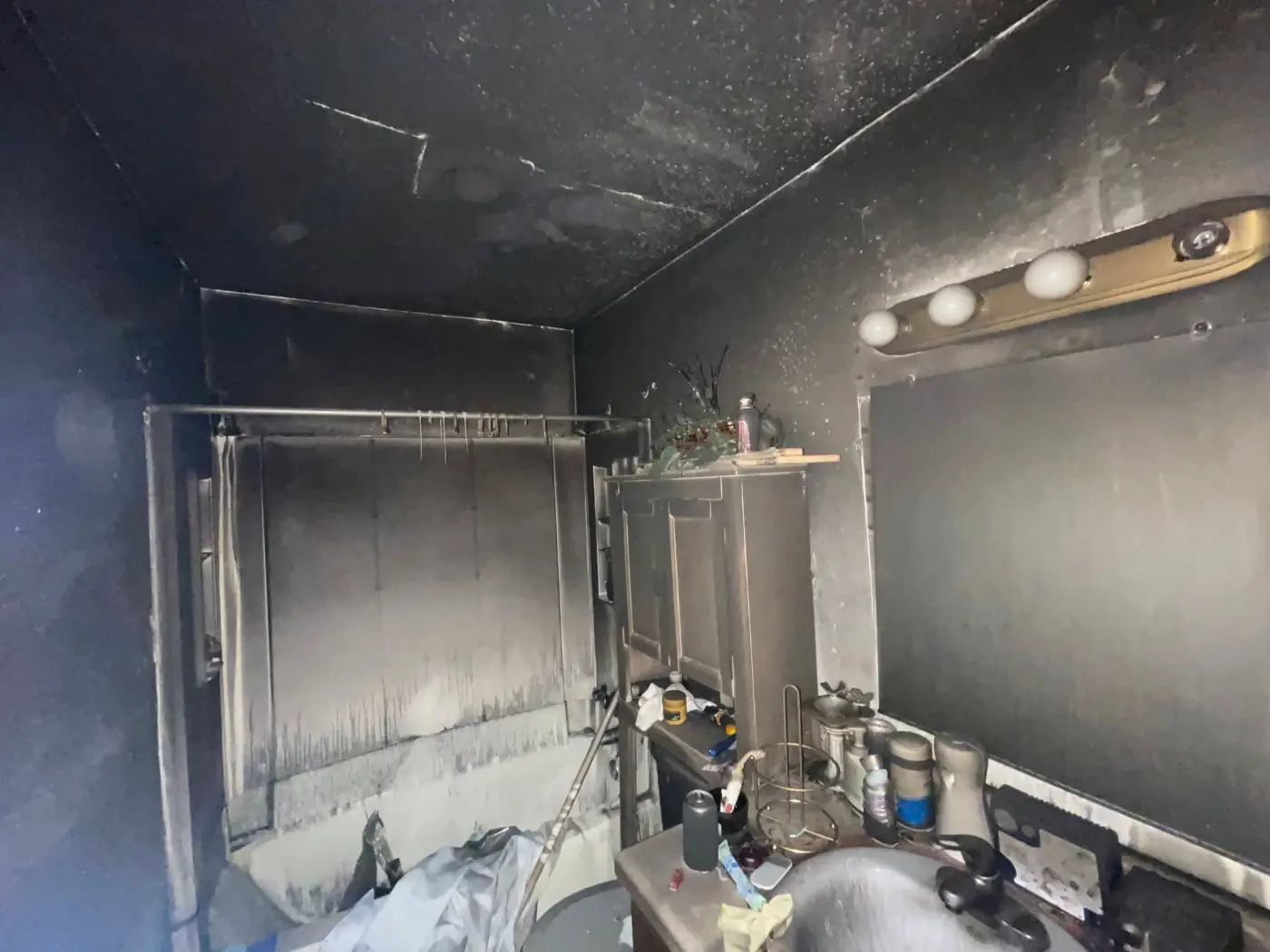
What is smoke odor removal?
Smoke odor removal is the process of eliminating the smell of smoke from a building and its contents by cleaning or removing the residue that causes it, then neutralizing the odor molecules that remain with treatments such as thermal fogging, hydroxyl generators or ozone. Air fresheners and sprays only mask the smell for a short time.
Smoke odor comes from tiny particles and gases that settle into porous materials. As long as those particles are there, the smell will keep coming back, especially when heat and humidity rise.
Why smoke smell lingers
- Porous materials absorb it. Drywall, wood, insulation, carpet, upholstery and clothing all trap smoke particles.
- It hides in cavities. Smoke is pushed into wall cavities, ceiling spaces and the attic by heat and pressure during a fire.
- The HVAC spreads it. Smoke pulled into the return ducts coats the inside of the ductwork and is blown back out every time the system runs.
- Humidity reactivates it. On humid summer days in the valley, odor that seemed gone can return as materials take on moisture.
How smoke odor is removed
- Remove the sourceBurned materials, soaked insulation and items that cannot be cleaned are removed. No deodorizing works while the source is still in the house.
- Clean surfacesWalls, ceilings, floors and contents are cleaned of smoke residue. See smoke damage cleanup.
- Clean the HVAC systemDuctwork, registers and the air handler are cleaned and filters replaced.
- Neutralize remaining odorThermal fogging, hydroxyl generators or ozone treatment break down odor molecules that cleaning did not reach.
- Seal where neededFraming and surfaces with set-in odor are sealed with an odor-blocking primer.
- Check and repeatThe home is checked for remaining odor, and treatment is repeated in problem areas.
Deodorization methods compared
| Method | How it works | Notes |
|---|---|---|
| Thermal fogging | Heated deodorant forms a fine fog that penetrates the same places smoke went | Home must be empty during treatment |
| Hydroxyl generators | Create hydroxyl radicals that break down odor molecules in the air and on surfaces | Can run while the home is occupied |
| Ozone treatment | Ozone oxidizes odor molecules | Home must be empty, including pets and plants; can damage rubber and some fabrics |
| Sealing | Shellac or odor-blocking primer locks odor into framing and surfaces | Used after cleaning, before repainting |
| Activated carbon filtration | Air scrubbers with carbon filters capture odor in the air | Supports other methods |
Which method fits depends on how heavy the odor is, what burned, and whether people need to stay in the home.
Ozone is not safe for people or petsRooms treated with ozone must be empty and aired out before anyone returns. Do not run an ozone generator in an occupied home.
What about my belongings?
Clothing, linens and curtains often come clean with specialized laundering. Upholstered furniture, mattresses and carpet depend on how much smoke they absorbed; heavy odor in foam and padding may not be removable. Hard items such as dishes and decor clean well. Items that cannot be deodorized are documented.
Odor after small fires and other smoke sources
You do not need a large fire to have a smoke odor problem. A pan fire, a burned pot left on the stove, a fireplace that backed up or smoke from a neighbor’s fire can all leave odor in a home. A kitchen fire cleanup often comes down to odor more than visible damage, because protein smoke from burned food is notoriously persistent. Lingering cigarette smoke odor in a home you bought or rented is handled with similar methods.
How to tell the odor is really gone
Smell the house after it has been closed up for a day, after the HVAC has run, and on a warm, humid day. Odor that only appears under those conditions means a source is still there, often in the ductwork, insulation or wall cavities near the fire.
Help across Charleston
Odor removal is part of fire and smoke damage restoration, and it follows soot removal and surface cleaning. Calls come from all over the area, from Kanawha City to Cross Lanes and South Hills. For water, fire and mold damage anywhere in the county, see Charleston, WV restoration services.
Call Kanawha Restoration for professional deodorization.
Smoke odor removal FAQs
How long does it take to remove smoke odor?
Light odor from a small fire may clear in a few days of cleaning and treatment. Heavy odor from a larger fire can take a week or more and repeat treatments.
Can air purifiers remove smoke smell?
Air purifiers with activated carbon reduce odor in the air, but they cannot reach smoke trapped in walls, insulation and furniture. The source has to be cleaned or removed.
Why did the smoke smell come back?
Usually because a source was missed, such as ductwork, insulation or a wall cavity, or because humidity reactivated odor in porous materials.