

What is structural drying?
Structural drying is the controlled process of removing water from a building’s materials, including framing, subfloors, drywall, plaster and concrete, using extraction, air movers and dehumidifiers, and confirming with moisture readings that each material is back to its normal dry level. It is the longest and most important part of water damage restoration.
The difference between drying and structural drying is measurement. Fans and open windows dry surfaces. Structural drying is planned around how much water is in the building, how fast it can be removed, and readings that prove it is gone.
Why extraction comes first
Extraction removes liquid water. Drying removes water that has soaked into materials. Extraction is far faster: a few hours of extraction with truck-mounted or portable equipment can remove more water than days of dehumidifiers. That is why emergency water removal starts every water job, and why skipping it makes drying take much longer.
The equipment and what it does
| Equipment | What it does |
|---|---|
| Truck-mounted and portable extractors | Pull standing water and water held in carpet and pad |
| Weighted extraction tools | Squeeze water out of carpet and pad without removing them |
| Air movers | Blow high-velocity air across wet surfaces to speed evaporation |
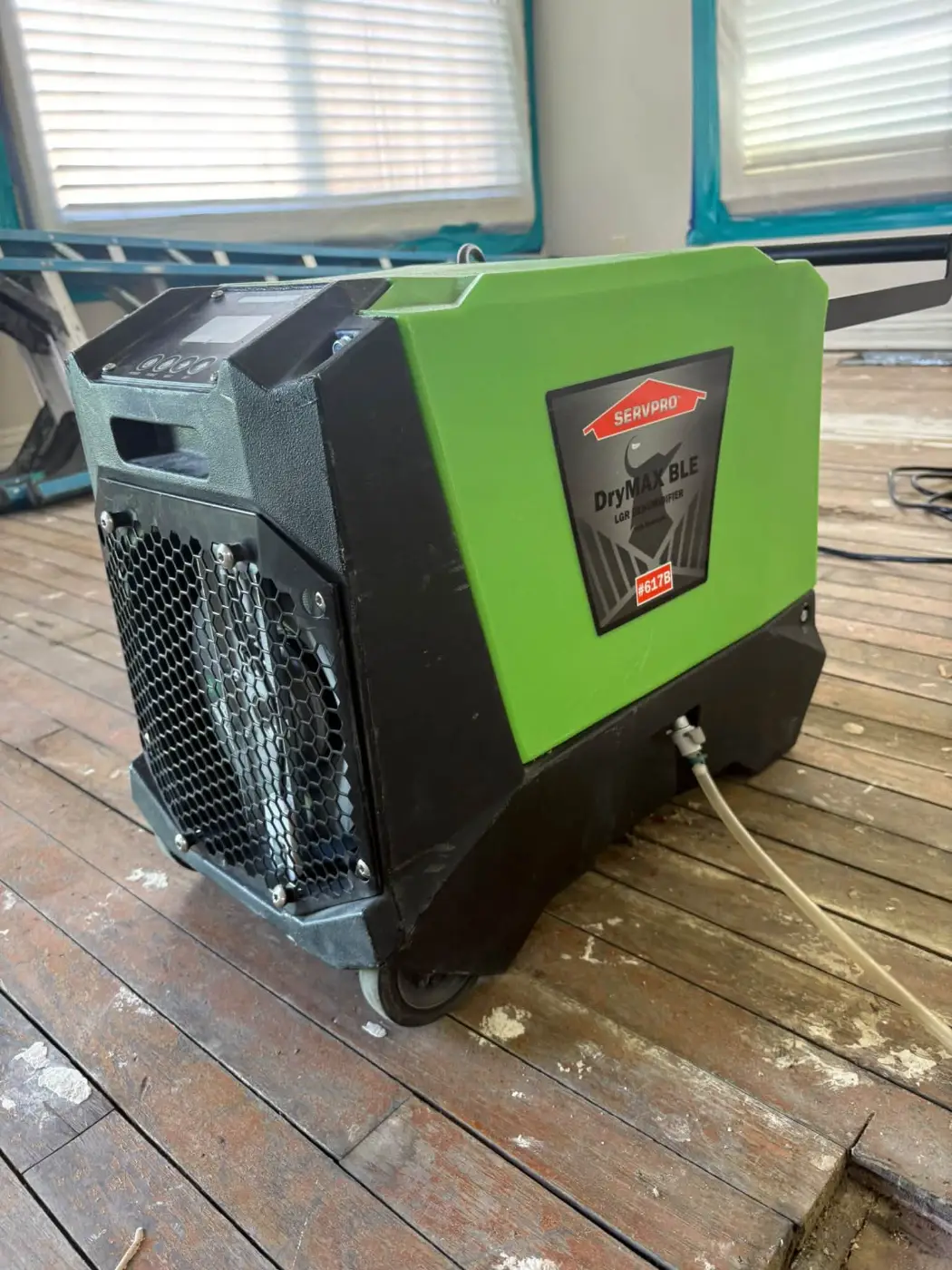
| Dehumidifiers (LGR and desiccant) | Remove the evaporated water from the air so it does not settle back into materials |
| Wall cavity drying systems | Push dry air into wall and ceiling cavities through small holes |
| Hardwood floor drying mats | Pull moisture up and out of wood flooring to limit cupping |
| Moisture meters and thermal cameras | Find wet materials and track drying each day |
How the drying process works
- Assess the jobMoisture mapping shows which materials are wet and how wet they are, and readings are taken from dry areas for comparison.
- ExtractStanding water and water in carpet and pad are removed.
- Remove what will not dryCarpet pad, swollen trim and saturated drywall or insulation are taken out when drying them is not practical or safe.
- Set up equipmentAir movers and dehumidifiers are placed based on the size of the area and the amount of water.
- Monitor dailyReadings are taken every day, logged and compared to the dry baseline; equipment is moved as areas dry.
- Confirm and remove equipmentWhen every material is back to its normal level, the equipment comes out and the job is documented.
How long does drying take?
| Situation | Typical drying time |
|---|---|
| Clean water, caught quickly, drywall and carpet | 3 to 4 days |
| Hardwood floors | 4 to 7 days, sometimes longer |
| Plaster walls and older homes | 5 to 7 days or more |
| Concrete basements and block walls | Several days to more than a week |
| After floodwater, once materials are removed | A week or more |
Drying depends on the materials, how long the water sat, and the weather. The IICRC S500 standard calls for drying to be confirmed with readings rather than ending on a set day.
Why proper drying matters in the Kanawha Valley
Charleston’s humid summers make drying harder. Damp air holds less extra moisture, so without dehumidifiers, water evaporating from floors and walls has nowhere to go and settles back into the house. Basements and crawl spaces are especially slow to dry because they are cool and below ground.
Older homes add their own challenges. Plaster walls, plank subfloors and solid hardwood floors in parts of the East End, the West Side and North Charleston hold water longer than modern materials. They can usually be saved with patient drying, but they need it.
What you can expect while equipment runs
- Noise. Air movers and dehumidifiers run day and night and are loud.
- Warm rooms. Dehumidifiers give off heat, which helps drying.
- Leave it on. Turning equipment off overnight slows drying and can allow mold to start.
- Keep doors closed to drying areas if asked; it helps the dehumidifiers work.
- Daily visits for readings and adjustments.
Signs drying was not finished
If a house was dried with fans alone or the equipment came out too early, you may notice a musty smell, cupping floors, bubbling paint, or mold spots along baseboards in the weeks after. Those are signs moisture is still trapped. A mold inspection or new moisture readings will show what is still wet.
Help across the county
Drying jobs happen in every part of town, from finished basements in Cross Lanes to river-level homes in Kanawha City. Structural drying is the core of water damage restoration and the step that follows flooded basement cleanup. For water, fire and mold damage anywhere, see restoration help across Charleston and Kanawha County.
Call Kanawha Restoration for extraction and structural drying.
Water extraction and drying FAQs
Can I turn off the drying equipment at night?
It is best not to. Drying is continuous, and turning equipment off lets moisture settle back into materials and slows the whole job.
How do I know when my house is actually dry?
Moisture readings on each wet material are compared with readings from unaffected areas of the same material. When they match, it is dry.
Why does my carpet feel dry but the equipment is still running?
The surface dries first. The pad, subfloor, framing and wall cavities underneath can still be wet, and those are what the readings track.
Can drying save my hardwood floors?
Often, if drying starts quickly. Specialized mats pull moisture from the wood, though some cupping can remain and may need sanding after it settles.