

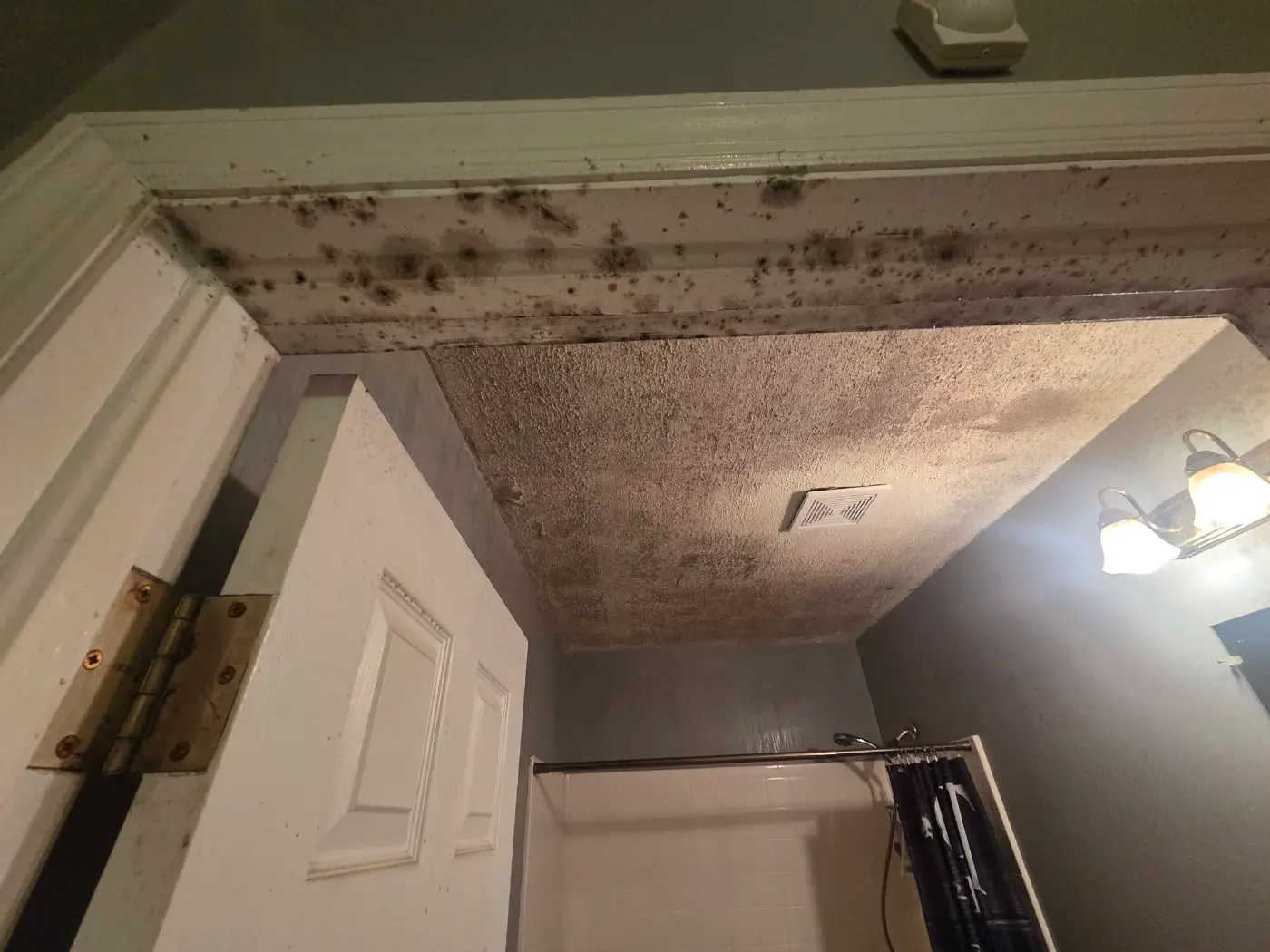
What is mold removal?
Mold removal, also called mold remediation, is the process of finding the moisture problem that let mold grow, containing the affected area, physically removing mold and contaminated materials, and drying and cleaning what is left so the mold does not come back. It is not the same as spraying bleach on a wall. Bleach can lighten a stain, but it does not reach mold growing inside drywall or wood, and it does nothing about the moisture.
Mold spores are everywhere, indoors and out. They only become a problem when they land on something damp and stay damp. Remove the moisture and the growth stops; remove the growth without the moisture and it returns.
Why is mold common in the Kanawha Valley?
A few local conditions make mold a regular problem in Charleston homes:
- Humid summers. Warm, humid air condenses on cool basement walls, crawl space joists and ductwork.
- River flooding. After the Kanawha or Elk rivers rise, flooded basements and first floors stay damp long enough for mold to take hold. See mold after flooding.
- Hillside homes and damp basements. Water draining off hills soaks into foundation soil and keeps block basement walls damp. Basement mold removal is one of the most common requests.
- Older crawl spaces. Many older homes sit on crawl spaces with bare dirt floors, which release moisture into the wood above. Crawl space mold often goes unnoticed for years.
- Poorly vented attics. Bathroom fans and dryer vents that empty into the attic, plus blocked soffit vents, lead to attic mold on roof sheathing.
Signs you may have a mold problem
- A musty, earthy smell, especially in basements, closets or after rain
- Black, green, gray or white spots on walls, ceilings, wood or fabric
- Peeling paint, bubbling wallpaper or warped drywall
- Allergy-like symptoms that improve when you leave the house
- A past leak or flood that was not professionally dried
If you smell mold but cannot see it, it is often inside a wall, under flooring or in the crawl space. A mold inspection uses moisture meters and thermal imaging to find it.
How does mold remediation work?
- InspectionThe extent of the growth and the moisture source are identified, often with moisture meters, thermal imaging and, where useful, air or surface samples.
- ContainmentThe work area is sealed with plastic sheeting and kept under negative air pressure so spores do not spread to clean rooms.
- Air filtrationHEPA air scrubbers run during the work to capture spores stirred up by removal.
- RemovalPorous materials with mold growth, such as drywall, insulation and carpet, are removed and bagged. Wood and other hard materials are cleaned, sanded or blasted.
- Cleaning and treatmentSurfaces are HEPA-vacuumed and wiped down, and an antimicrobial may be applied.
- Moisture correctionThe cause is addressed: leaks repaired, dehumidifiers installed, vapor barriers laid in crawl spaces, or vents rerouted in attics.
The industry reference for this work is the IICRC S520 standard for mold remediation, along with EPA guidance for homes and buildings.
Can you remove mold yourself?
Sometimes. The EPA suggests that a homeowner can usually handle mold covering less than about 10 square feet on a hard surface, using detergent and water, gloves, goggles and an N-95 respirator. Get professional help when:
- The moldy area is larger than about 10 square feet
- Mold keeps coming back after cleaning
- It followed sewage, a flood or contaminated water
- It is inside walls, the HVAC system, the crawl space or the attic
- Anyone in the home has asthma, allergies or a weakened immune system
Do not disturb large areas of moldScrubbing, dry-brushing or sanding mold without containment releases spores into the rest of the house.
What does mold remediation cost?
| Factor | Why it matters |
|---|---|
| Size of the affected area | More square footage means more removal and longer containment |
| Location | Crawl spaces and attics are harder to work in than open rooms |
| Materials | Drywall and insulation are removed; framing is cleaned |
| Moisture source | Fixing a leak or adding a vapor barrier adds to the job |
| Testing | Air or surface sampling, when needed, is a separate cost |
Mold removal help across Kanawha County
Requests come from every part of the county, including basements in South Hills and Spring Hill, crawl spaces in Sissonville and Cross Lanes, and flood-prone homes in Kanawha City and Marmet. Mold removal sits alongside water and fire cleanup as part of the restoration services in Charleston, WV on this site.
Call Kanawha Restoration for inspection and removal.
How do you prevent mold from coming back?
Moisture control is the key; our guide to preventing mold in a damp basement covers it in detail, and what happens during professional mold remediation explains each step of the work.
- Keep indoor humidity between 30 and 50 percent; run a dehumidifier in the basement in summer.
- Dry any leak or spill within 24 to 48 hours.
- Make sure bathroom fans, kitchen hoods and dryer vents exhaust outdoors, not into the attic.
- Cover bare dirt crawl space floors with a vapor barrier.
- Keep gutters clear and grade soil away from the foundation.
Mold removal FAQs
Is black mold more dangerous than other mold?
The color of mold does not tell you how harmful it is. Any mold growing indoors can trigger allergy and asthma symptoms, and all of it should be removed the same careful way.
Do I need mold testing?
Not always. If mold is visible, it needs to be removed regardless of the species. Testing is useful when you smell mold but cannot find it, after remediation to confirm cleanup, or for real estate and legal reasons.
Will painting over mold fix it?
No. Mold keeps growing under paint, and the moisture causing it is still there. The growth and the moisture source both have to be dealt with.
How long does mold remediation take?
A small, contained area can take a day or two. A full basement or crawl space, including drying and moisture fixes, can take several days.
Can mold grow in winter?
Yes. Condensation on cold walls, windows and attic sheathing gives mold the moisture it needs, especially in poorly vented attics and bathrooms.