

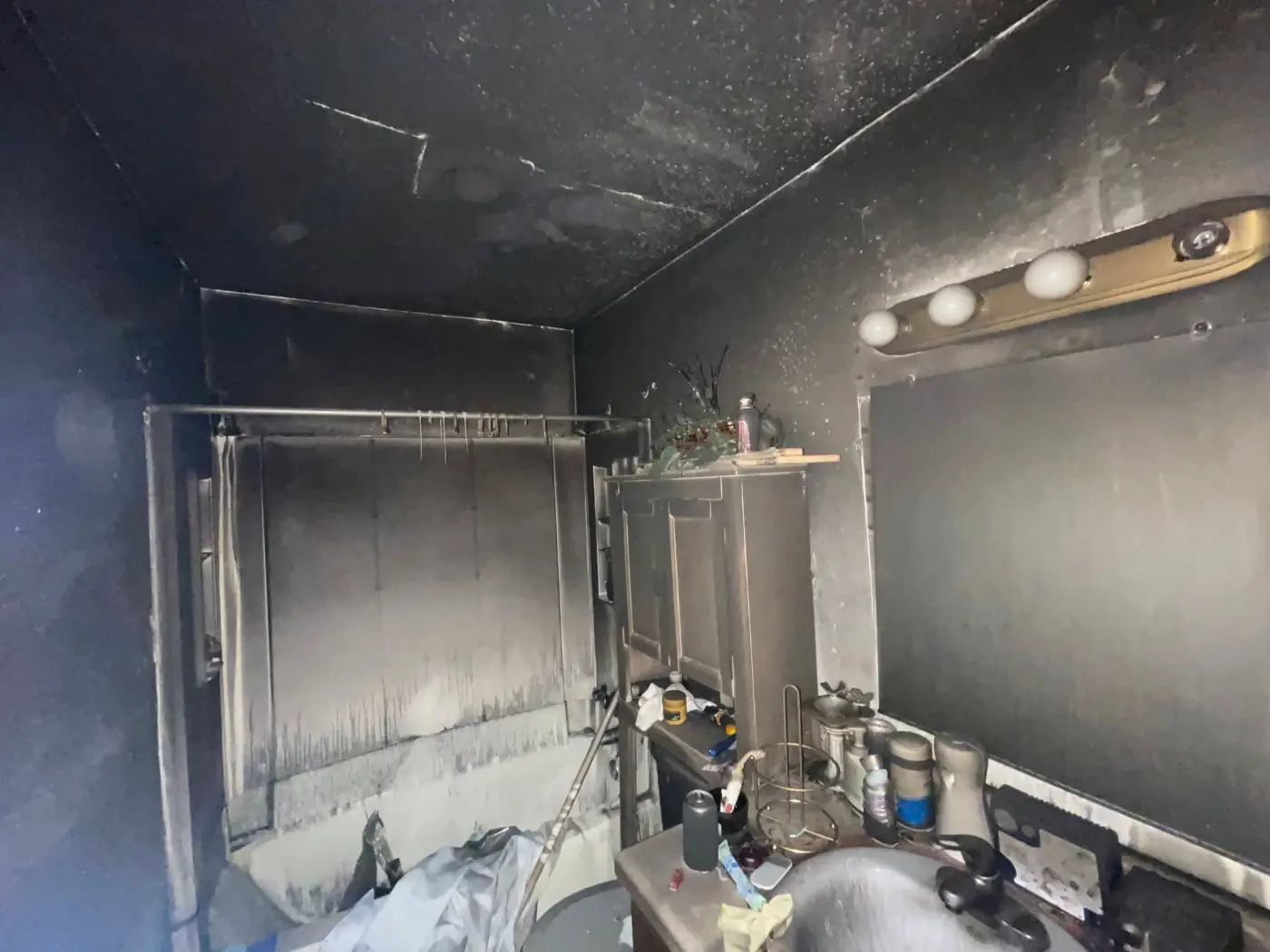
What is smoke damage cleanup?
Smoke damage cleanup is the removal of smoke residue, film and odor from a building’s surfaces, contents and HVAC system after a fire, using cleaning methods matched to the type of residue and the material it is on. It is needed after any fire, including small ones that never spread past one room, because smoke moves with air currents through the whole house.
Smoke residue is acidic. On many surfaces it starts causing damage within hours, yellowing plastics, tarnishing metal and staining grout and stone. Cleaning early often means cleaning instead of replacing.
Where smoke goes
Smoke follows air and heat. In a typical house fire it:
- Rises and collects on ceilings, especially in corners
- Gets pulled through HVAC returns and spread through the ductwork to every room
- Settles on cooler surfaces, like exterior walls and windows, leaving shadow lines
- Works into closets, cabinets, drawers and the attic
- Coats electronics and appliances, inside and out
- Settles into fabric, carpet, upholstery and insulation
That is why smoke damage is often found in rooms that were nowhere near the fire.
How smoke damage cleanup works
- Assess and testEach room is inspected, and surfaces are tested to find which residue is present and which cleaning method works on it.
- Ventilate and filterAir scrubbers with HEPA filters capture airborne particles while work is underway.
- Dry-clean firstDry chemical sponges and HEPA vacuums remove loose residue without smearing it into the surface.
- Wet-cleanWalls, ceilings, cabinets and hard surfaces are cleaned with solutions suited to the residue.
- Clean the HVACDucts, registers and the air handler are cleaned, and filters replaced, so the system does not keep spreading residue.
- Address the odorRemaining odor is treated once surfaces are clean. See smoke odor removal.
Types of smoke residue
| Residue | Source | Cleanup approach |
|---|---|---|
| Dry, powdery | Fast, hot fires burning wood and paper | Dry sponging and HEPA vacuuming, then wet cleaning |
| Wet, smeary | Smoldering fires burning plastics, rubber and synthetics | Specialized degreasing cleaners; often needs several passes |
| Protein | Kitchen and cooking fires | Enzyme and degreasing cleaners; strong odor control needed |
| Fuel oil | Furnace puff-backs in oil-heated homes | Heavy-duty solvent cleaning |
Wiping smoke residue with a household cleaner is one of the most common mistakes after a fire. It smears the residue deeper into paint and texture. Soot removal covers the heavier black deposits closer to the fire.
Contents cleaning
Smoke damage cleanup includes belongings as well as the building:
- Hard goods such as dishes, decor and many plastics can usually be cleaned.
- Clothing and linens can often be laundered or dry-cleaned with specialized processes.
- Electronics should be checked before use; smoke residue can corrode circuit boards.
- Upholstered furniture and mattresses depend on how much smoke they absorbed.
- Documents and photos may be salvageable with specialized cleaning.
Items that cannot be cleaned are photographed and listed.
What not to do after smoke damage
- Do not wipe walls, ceilings or furniture.
- Do not run the HVAC system until it is inspected and cleaned.
- Do not use electronics or appliances that were exposed to heat or heavy smoke until checked.
- Do not paint over smoke-stained walls before they are cleaned and sealed.
- Do not eat food that was exposed to smoke or heat, even if it was sealed.
Smoke damage from a nearby fire
Smoke can come in from a fire in a neighboring unit, a nearby house or a wildfire. In apartment buildings and row homes downtown and in older parts of the East End and West Side, smoke can travel through shared walls, attics and ventilation.
Help across Charleston
Smoke cleanup is part of fire and smoke damage restoration and usually happens alongside soot removal and odor treatment. Calls come from all over the county, including Cross Lanes, South Charleston and Sissonville. This site, Kanawha Restoration, covers water, fire and mold damage across Charleston and Kanawha County.
Call Kanawha Restoration for smoke cleanup.
Smoke damage cleanup FAQs
Can I clean smoke damage myself?
Light smoke film on hard surfaces in one room can sometimes be cleaned with a dry chemical sponge. Heavy residue, greasy smoke, odor throughout the house or smoke in the HVAC system usually needs professional cleaning to avoid smearing and lingering odor.
How long does smoke damage cleanup take?
A single room or a small kitchen fire may take a few days. A whole house with contents cleaning and HVAC work can take a week or more.
Will painting cover smoke damage?
Not on its own. Smoke residue has to be cleaned first and the surface sealed with a primer made to block odor and stains, or the stain and smell come back through the paint.