

What is emergency water removal?
Emergency water removal is the first stage of water damage restoration: pumping out standing water and extracting water from carpet, pad and hard floors as quickly as possible after a leak or flood. It is about speed. The goal is to get as much water out of the house as possible before it wicks into walls, soaks through subfloors and spreads to rooms that were dry.
Extraction removes far more water than drying equipment ever will. A good extraction on day one can cut drying time by days and save materials that would otherwise have to be torn out.
When do you need emergency water removal?
Call right away if any of these are true:
- There is standing water on any floor of the house
- Carpet squishes when you walk on it
- Water is coming through a ceiling or light fixture
- A water heater, washing machine or supply line has burst
- Sewage has backed up through a floor drain or toilet
- Floodwater from a river, creek or storm has come inside
The water does not have to be deep. Half an inch across a finished basement is enough to ruin carpet pad, baseboards and the bottom of the drywall if it sits overnight.
How does emergency water removal work?
- Stop the source and make it safeThe water source is shut off, and power to wet areas is checked before anyone works in them.
- Pump standing waterSubmersible pumps move large volumes of water out of basements and crawl spaces.
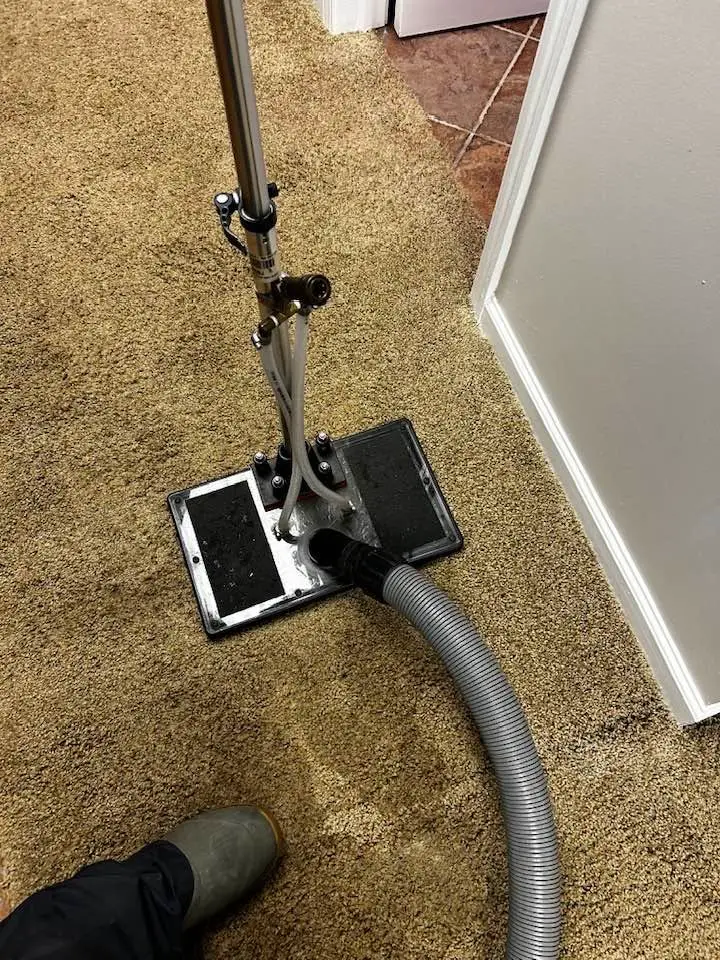
- Extract carpets and floorsTruck-mounted or portable extractors with weighted or wand tools pull water out of carpet and pad.
- Check for hidden waterMoisture meters and thermal cameras find water that has moved under flooring and into wall cavities.
- Remove what cannot be savedSaturated carpet pad and other materials that will not dry are pulled out.
- Set up drying equipmentAir movers and dehumidifiers go in so water extraction and drying can continue.
What to do while you wait
- Shut off the water. Find the main shutoff valve, usually where the line enters the house in the basement or crawl space. Turn it clockwise until it stops.
- Make the area electrically safe. If you can reach the breaker panel without standing in water, turn off power to the wet rooms.
- Lift what you can. Move rugs, electronics, papers and photos to a dry floor. Put furniture legs on foil or wood blocks.
- Take photos and video. Record the water level and every damaged item before anything is moved or thrown out.
- Open cabinet doors and drawers near the water so they can start to air out.
Do not use a household vacuum on waterA regular vacuum is not built for water and can cause an electric shock. Also stay out of any room where the ceiling is bulging with water.
Why the first hours matter in Charleston homes
Many homes around Charleston have finished basements, older plaster walls or hardwood floors over plank subfloors. All three hold water. In a finished basement, water gets under carpet and behind paneling quickly. Plaster absorbs water slowly but takes a long time to give it back. Hardwood cups and buckles when water gets under it.
Fast extraction protects all three. It is also the difference between a clean-water job that can be dried in place and one that has to be treated as contaminated because it sat too long.
River-level neighborhoods such as Kanawha City, Malden and Rand and Marmet see the most flood calls. Basements on hillside streets in South Hills and on the West Side take on water from runoff during heavy storms. Wherever the water came from, the first step is the same: get it out.
Clean water vs. contaminated water
What the water is matters as much as how much there is.
| Source | Category | What it means for removal |
|---|---|---|
| Burst supply line, water heater, sink overflow | Clean (Category 1) | Extracted and dried; most materials can be saved if caught early |
| Washing machine or dishwasher discharge | Gray (Category 2) | Extracted, cleaned and disinfected; carpet pad removed |
| Sewage backup, river or creek floodwater | Black (Category 3) | Crew wears protective gear; porous materials removed and disinfected |
If the water came from outside or from a drain, assume it is contaminated and keep children and pets away from it. See storm and flood damage for what changes with floodwater.
What does emergency water removal cost?
Cost depends on how much water there is, how many rooms it reached, whether it is clean or contaminated, and how much has to be removed. Extraction is usually part of a larger water damage job that includes drying and monitoring.
After the water is out
Removing the water is the start, not the end. The structure still has to be dried, which takes several days of air movers and dehumidifiers, plus daily moisture readings. If water reached a basement, see flooded basement cleanup. If it came from a pipe, burst pipe water damage explains what is usually repaired and replaced. The full picture is on the water damage restoration page, and for every type of damage across town see local restoration help in Charleston.
Call now and our team can start extraction.
Emergency water removal FAQs
How fast should water be removed?
As soon as possible. Within the first 24 to 48 hours, wet materials can start growing mold, and clean water begins to pick up contamination as it sits.
Can I use a wet/dry shop vacuum myself?
For a small spill on a hard floor, yes. For water in carpet, under flooring or across more than one room, a shop vacuum cannot pull enough water out, and moisture left behind leads to mold and odor.
Will my carpet have to be thrown away?
Not always. After a clean-water leak caught early, carpet can often be extracted and dried in place, though the pad underneath is usually replaced. After sewage or floodwater, carpet and pad are removed.
Do I need to move out during water removal?
Usually not for a clean-water leak. After sewage or major flooding, part or all of the home may need to be closed off until it is cleaned and dried.