The short answer
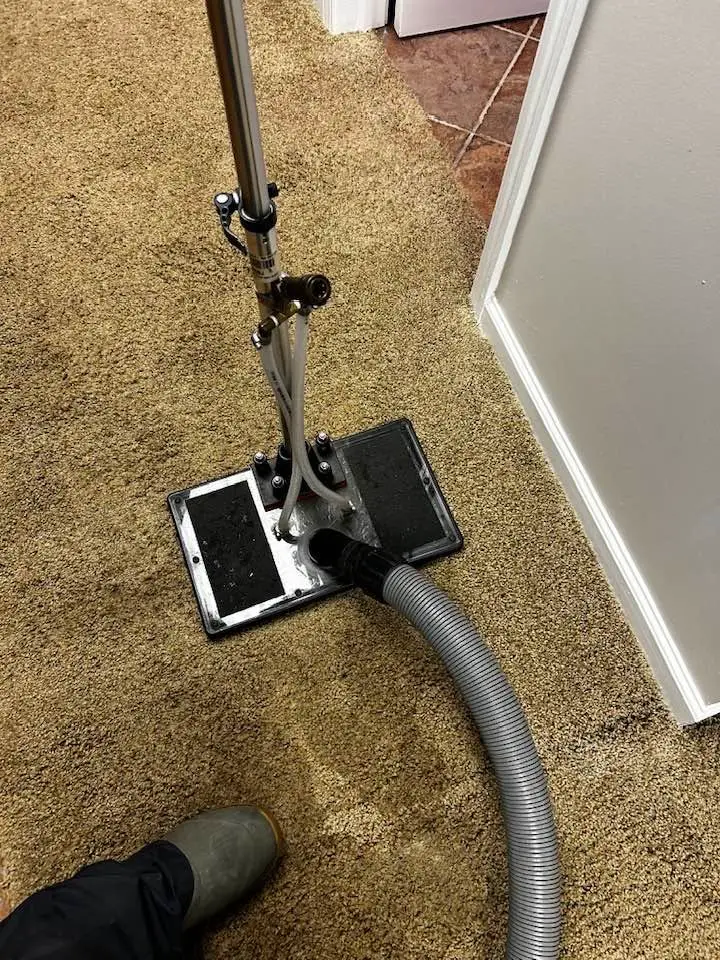
Structural drying removes moisture from the building itself by speeding up evaporation and then capturing that moisture out of the air. Air movers push dry air across wet surfaces, dehumidifiers pull the evaporated water out of the room, and a technician measures the materials every day until they match a dry reference. It usually takes three to five days after a clean-water leak.
Why surfaces dry fast and structures do not
After extraction, carpet and the face of the drywall may feel dry within a day. The water that soaked into the materials underneath does not leave that quickly. Wood framing, subfloor sheathing, the inside of wall cavities and concrete all hold water in their pores and give it up slowly. Leave that moisture in place and the result is warped floors, mold behind walls and a musty smell weeks later.
The science in plain terms
Drying depends on four things working together:
| Factor | What it does | How it is controlled |
|---|---|---|
| Airflow | Carries moisture away from wet surfaces | Air movers aimed across floors and walls |
| Humidity | Dry air absorbs more moisture than damp air | Dehumidifiers keep the room air dry |
| Temperature | Warm materials release moisture faster | Equipment heat and the home’s HVAC, sometimes heaters |
| Time | Dense materials need days, not hours | Daily monitoring until readings are normal |
Too much airflow without enough dehumidification just moves humid air around and can push moisture into dry areas. The skill is in balancing the equipment for the size of the room and the amount of water.
Step by step
- Moisture mappingA technician uses moisture meters, a thermal camera and a hygrometer to find where the water went and record starting readings, including a dry reference from an unaffected area.
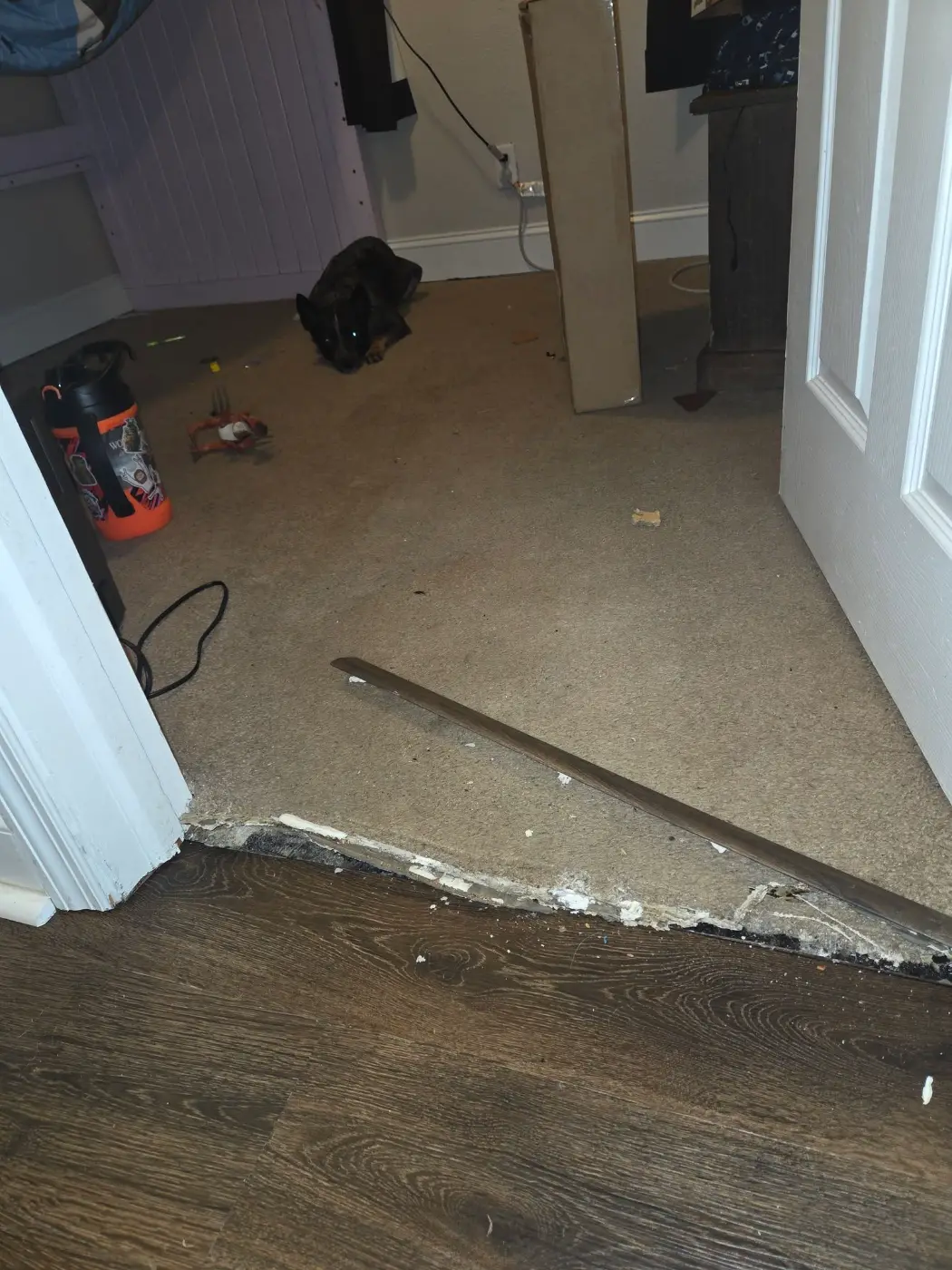
- Removal of what cannot drySaturated carpet pad, swollen trim and drywall that wicked contaminated water are removed so the structure underneath can dry.
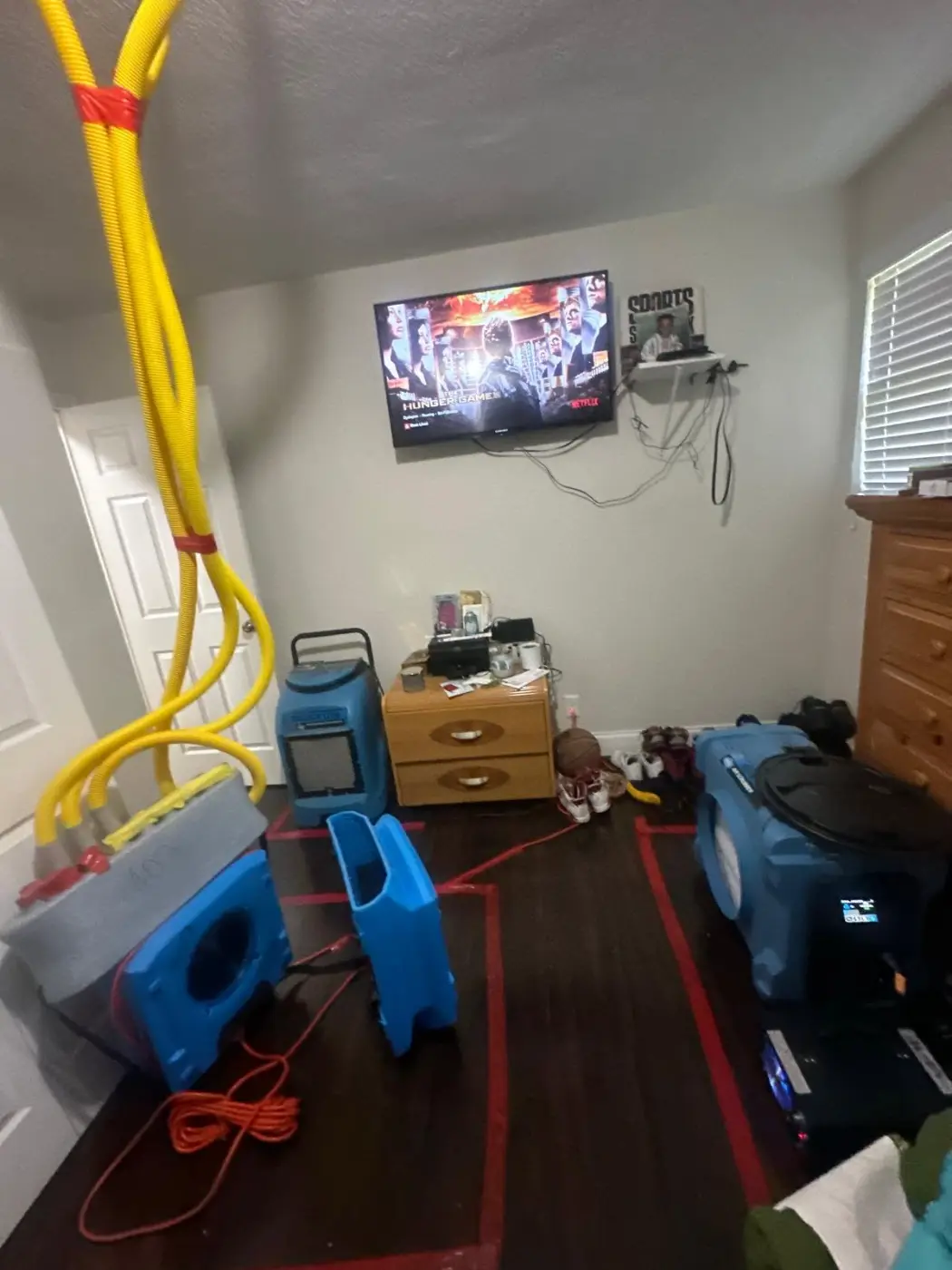
- Equipment setupAir movers are placed every few feet along wet walls; dehumidifiers are sized to the room volume and the amount of water.
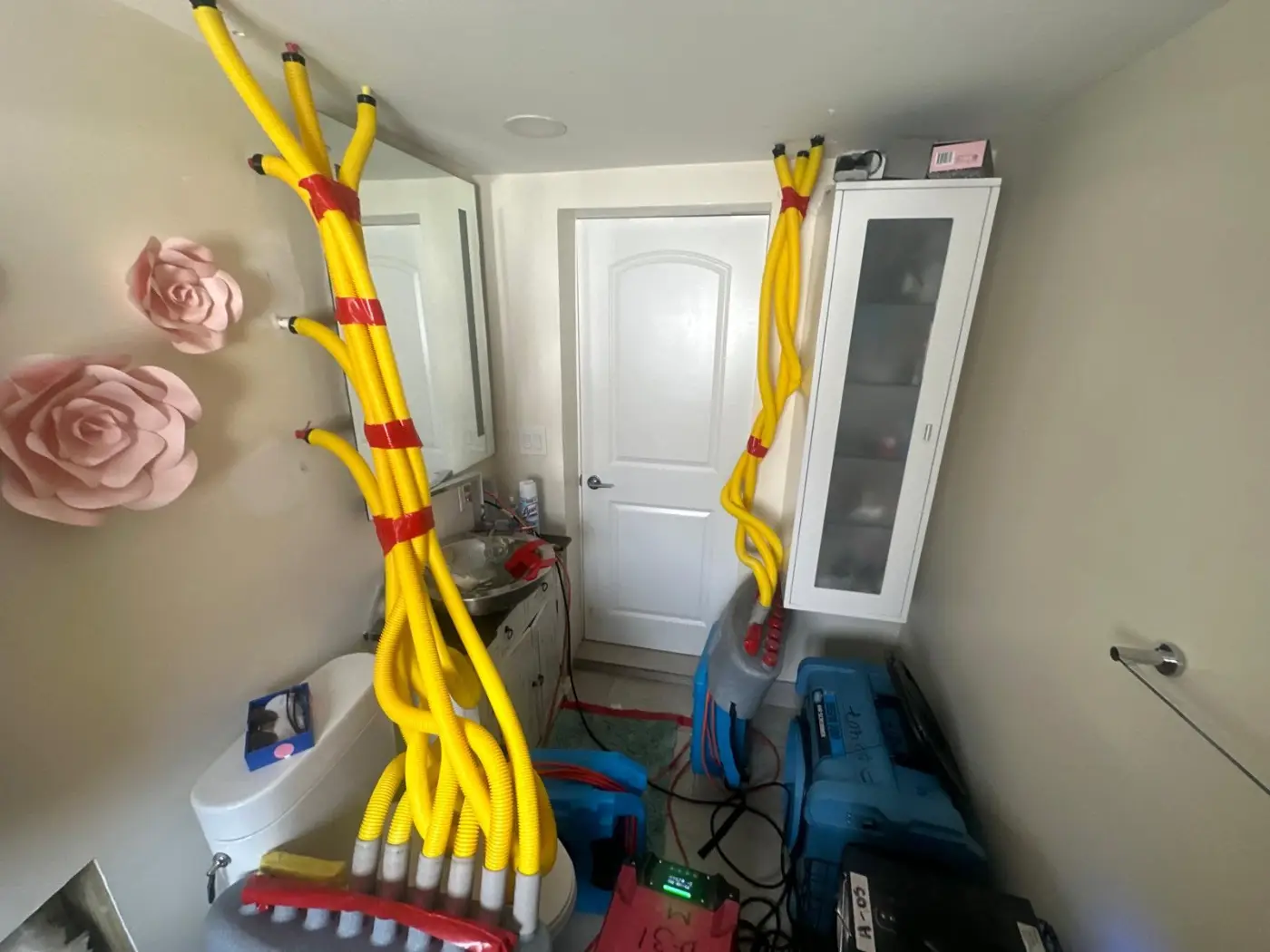
- Wall and cavity dryingSmall holes at the base of walls or behind baseboards let dry air be pushed into cavities, often with hoses and a manifold.
- Floor dryingMats or panels draw moisture out of hardwood; subfloors may be dried from below in a basement or crawl space.
- Daily monitoringReadings are taken each day, equipment is moved or removed as areas dry, and the results are logged.
- Final readingsDrying is complete when wet materials match the dry reference. The equipment comes out and repairs can begin.
The equipment you will see
Air movers are low, snail-shaped fans that blow a high-volume sheet of air along the floor and up the wall. They are loud and are meant to run continuously.
Low-grain refrigerant (LGR) dehumidifiers pull far more water out of the air than household units, and keep working in the drier conditions toward the end of a job.
Desiccant dehumidifiers are used in cold spaces, such as an unheated basement or crawl space in winter, where refrigerant units lose efficiency.
Wall cavity and floor drying systems use hoses, manifolds and mats to force dry air into places an air mover cannot reach.
HEPA air scrubbers are added when the water was contaminated or mold is present, to filter particles out of the air during the work.
How drying is measured
The standard for professional water damage work, IICRC S500, calls for drying to be confirmed with measurements, not a set number of days. A technician compares readings in the wet materials to readings from the same material in a dry part of the house. When they match, that material is dry. Ask for the drying log. It shows the starting readings, the daily progress and the final readings, and it is the best evidence that the job was finished properly.
Things that slow drying in Charleston homes
- Plaster and lath walls, common in older homes in the East End and on the West Side, hold more water than drywall.
- Solid hardwood floors dry slowly and can cup if dried too aggressively.
- Block foundation walls absorb water and release it for days.
- Summer humidity in the valley makes dehumidifiers work harder.
- Crawl spaces with dirt floors keep adding moisture from below.
What you can do to help
Keep windows and doors closed so the dehumidifiers are not drying outdoor air. Leave the equipment running and in position, even at night. Clear furniture and stored items out of wet rooms. Keep the home’s heating or cooling at a moderate, steady setting unless the technician asks otherwise.
For timelines, see how long water damage restoration takes. The water extraction and drying service page covers what the first visit includes, and flooded basement cleanup covers below-grade drying.
Call now and our team can map the moisture and set up drying.
Structural drying FAQs
Can I turn the equipment off at night?
It is best not to. Drying is continuous, and turning equipment off lets humidity rise again, which can add days.
Why are there holes at the bottom of my walls?
Small holes behind baseboards let dry air into wall cavities so the framing can dry without removing the whole wall.
Will my hardwood floors be saved?
Often, if drying starts quickly. Hardwood is dried slowly with mats or panels so it does not crack. Some cupping can settle back as the wood reaches normal moisture.