The short answer
The most common causes of water damage in Charleston and Kanawha County homes are river and creek flooding on low ground, hillside runoff into basements, pipes that freeze in winter cold snaps, aging galvanized and cast iron plumbing in older homes, failed water heaters and appliance hoses, sump pump failures, roof leaks, and humidity and condensation in summer. Where you live in the county changes which of these you are most likely to face.
How the valley shapes water damage
Charleston sits where the Elk River meets the Kanawha River, with neighborhoods spread along both banks and up the steep hillsides around them. That geography creates three different water problems:
- On the flat ground near the rivers, such as Kanawha City, parts of the West Side, Malden and Marmet, the risk is river flooding and high groundwater pushing into basements.
- On the hillsides, such as South Hills, Spring Hill and the upper West Side, rain runs downhill toward foundations and into basements dug into the slope.
- In the hollows and along small creeks, including parts of Sissonville, Davis Creek and areas along the Elk upstream, heavy rain can turn a creek into a flash flood within hours. The June 2016 flood, which killed 23 people across West Virginia, including six in Kanawha County, showed how fast that can happen.
1. River and creek flooding
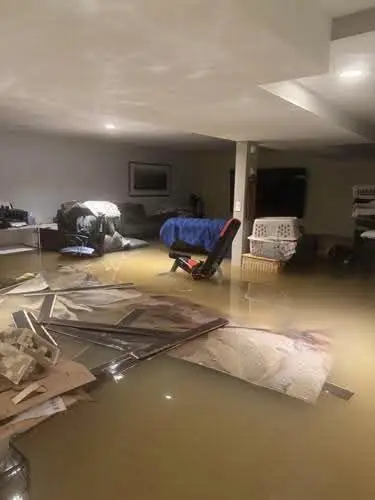
When the Kanawha or Elk runs high, low streets near the banks can take on water, and creeks that feed them back up. Floodwater is treated as contaminated (Category 3) because it carries sewage, chemicals and silt. Drywall, insulation and carpet it touches are usually removed. See storm and flood damage, and for preparation, preparing your home for heavy rain and storms in Kanawha County.
2. Hillside runoff and basement seepage
On hillside lots, the uphill side of the house acts like a dam. Water collects against the foundation, soaks the soil and finds its way through block walls, the joint between the wall and floor, and window wells. Gutters that overflow and downspouts that empty against the house make it worse. How to reduce the risk of basement moisture covers grading and drainage fixes.
3. Frozen pipes
Charleston winters are mild most of the time, which is exactly why cold snaps catch people out. Pipes in exterior walls, unheated crawl spaces, garages and under kitchen sinks on outside walls are the usual failures. The pipe often splits while frozen and only leaks when it thaws. To prevent it, insulate exposed pipes, open cabinet doors on cold nights, let a faucet drip, and know where your shutoff is. Burst pipe water damage covers the cleanup.
4. Aging plumbing in older homes
Large parts of the East End, the West Side, Kanawha City and North Charleston were built before 1960. Many of those homes still have some original galvanized steel supply pipe, which rusts from the inside and tends to fail at threaded joints inside walls, and cast iron drain lines that crack with age. These failures are often slow and hidden; see how to identify hidden water damage behind walls.
5. Water heaters and appliances
A tank water heater typically lasts around 8 to 12 years. When the tank rusts through, it can release its full contents and keep refilling until the supply is shut off. Washing machine hoses, dishwasher connections, refrigerator ice maker lines and toilet supply lines are other frequent sources. Braided stainless hoses and a drain pan under the water heater are cheap insurance.
6. Sump pump failures
Many Kanawha County basements rely on a sump pump, and pumps tend to fail at the worst time: during a long, heavy rain, often when the power goes out. A battery backup, a high-water alarm and a test before each wet season prevent most failures.
7. Roof and flashing leaks
Heavy rain, wind and ice can all open up roofs, and older homes with complicated rooflines and chimneys have more places for flashing to fail. Roof leaks often run down inside walls and appear far from where the water entered. Ceiling and drywall water damage covers what usually has to be opened.
8. Humidity and condensation
The Kanawha Valley is humid in summer. Cold water pipes, air conditioning lines and ducts sweat and drip, and basements and crawl spaces stay damp. It is not dramatic, but over a few seasons it leads to rot and mold. How to prevent mold in a damp basement covers humidity control.
Which areas see what
| Area | Most common water problems |
|---|---|
| Kanawha City | River flooding, high groundwater, older supply lines |
| West Side | Hillside runoff, older plumbing, Elk River flooding upstream |
| East End | Older plumbing and plaster, basement seepage |
| South Hills | Hillside runoff, basements built into slopes |
| Sissonville | Creek flooding, crawl spaces, well and septic systems |
| Malden and Rand and Marmet | River and creek flooding, older homes |
What to do when it happens
Whatever the cause, the first steps are the same: stop the water, make the area safe, document it and get extraction and drying started. What to do immediately after water damage lists them in order, and water damage restoration explains the full process.
Call now and our team works in your part of Kanawha County.
Charleston water damage FAQs
What is the most common cause of water damage in Charleston homes?
Plumbing and appliance failures inside the house are the most frequent, but basement water from runoff, seepage and sump pump failures causes many of the largest losses.
Is my basement flooding from groundwater or a leak?
Water that rises through the floor or wall joints after rain usually points to groundwater or runoff. Water near a fixture, the water heater or a wall with pipes points to plumbing. A water meter test helps tell them apart.
Do homes on hillsides flood?
Yes, though differently. They rarely get river water but often get runoff and seepage into basements built into the slope.