The short answer
Hidden water damage usually shows itself through small signs: a musty smell, paint that bubbles or peels, baseboards that swell or separate, a stain that spreads, a floor that feels soft, or a water bill that creeps up. To confirm it, check the water meter with every fixture off, then have the wall checked with a moisture meter and thermal camera before opening anything up.
Where hidden leaks come from
Most water inside walls and ceilings comes from a small number of sources:
- Supply lines to sinks, toilets, ice makers and washing machines, especially old galvanized pipe or cheap braided hoses.
- Drain lines under showers and tubs, where a failed seal leaks only when the shower runs.
- Toilet wax rings, which let water seep into the subfloor every time the toilet is flushed.
- Shower and tub surrounds, where cracked grout or caulk lets water behind the tile.
- Roof and flashing leaks that run down inside an exterior wall before showing up anywhere.
- Condensation on cold water pipes and air conditioning lines in humid summer weather.
- Foundation seepage behind finished basement walls.
Signs of hidden water damage
| Sign | What it often means |
|---|---|
| Musty or earthy smell in one room | Moisture and possibly mold inside a wall or under flooring |
| Paint bubbling, peeling or blistering | Water pushing through drywall from behind |
| Yellow or brown stain that grows | An active leak above or behind it |
| Baseboard swelling, gaps or separation | Water at the bottom of the wall |
| Soft, spongy or warped floor | Wet subfloor, often near toilets, tubs or dishwashers |
| Loose tiles or cracked grout | Water under or behind the tile |
| Higher water bill with no change in use | A leak in the supply plumbing |
| Sound of running water when nothing is on | A supply leak inside a wall |
One sign alone may be nothing. Two or three in the same area almost always means water.
How to check for a hidden leak yourself
Use the water meter. Turn off every faucet, appliance and the ice maker. Note the reading on the meter, or watch the small leak indicator dial. Wait an hour without using water. If the reading changed or the indicator moved, water is leaving the system somewhere.
Check under and behind fixtures. Look in base cabinets under sinks with a flashlight, feel the floor around the base of toilets, and look at the ceiling below upstairs bathrooms.
Test the toilet. Put a few drops of food coloring in the tank and wait 15 minutes without flushing. Color in the bowl means the flapper is leaking; a stain on the ceiling below suggests the wax ring.
Watch after showers. A stain or damp spot that appears after showering points to the drain, valve or tile rather than the supply.
Don’t start cuttingOpening walls to look for water is guesswork and creates extra repairs. A moisture meter and thermal camera can usually locate the wet area first, so only the damaged section is opened.
How professionals find hidden water
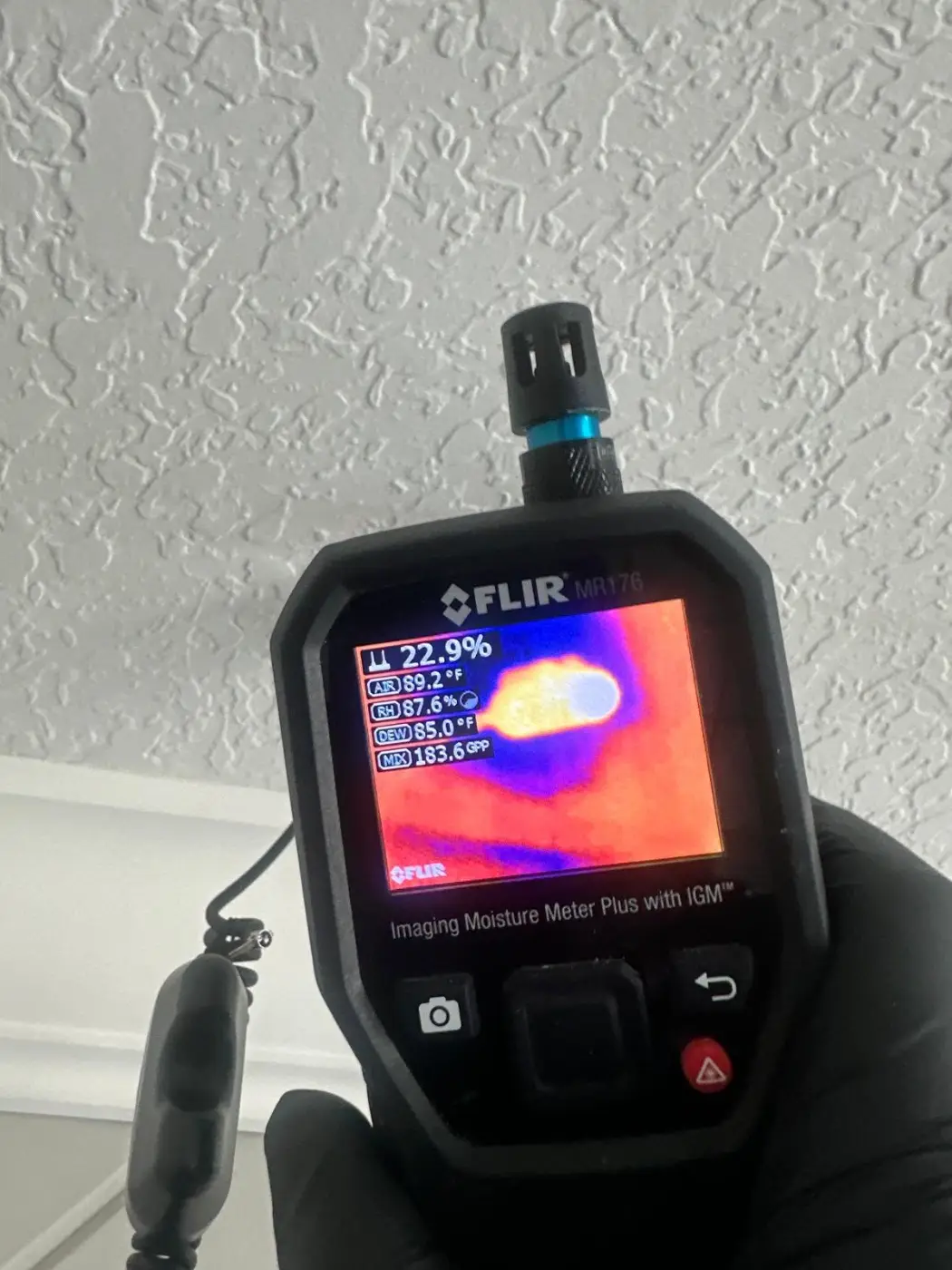
A restoration technician uses three tools together:
- Thermal imaging camera. Wet materials are usually cooler than dry ones because of evaporation, so damp areas show up as darker patches. It shows where to look, not proof of water.
- Moisture meters. Pin meters measure moisture in wood and drywall directly; non-penetrating meters scan through surfaces. Readings are compared to a dry area of the same material.
- Hygrometer. Measures humidity in the room and wall cavities to see whether the air itself is holding moisture.
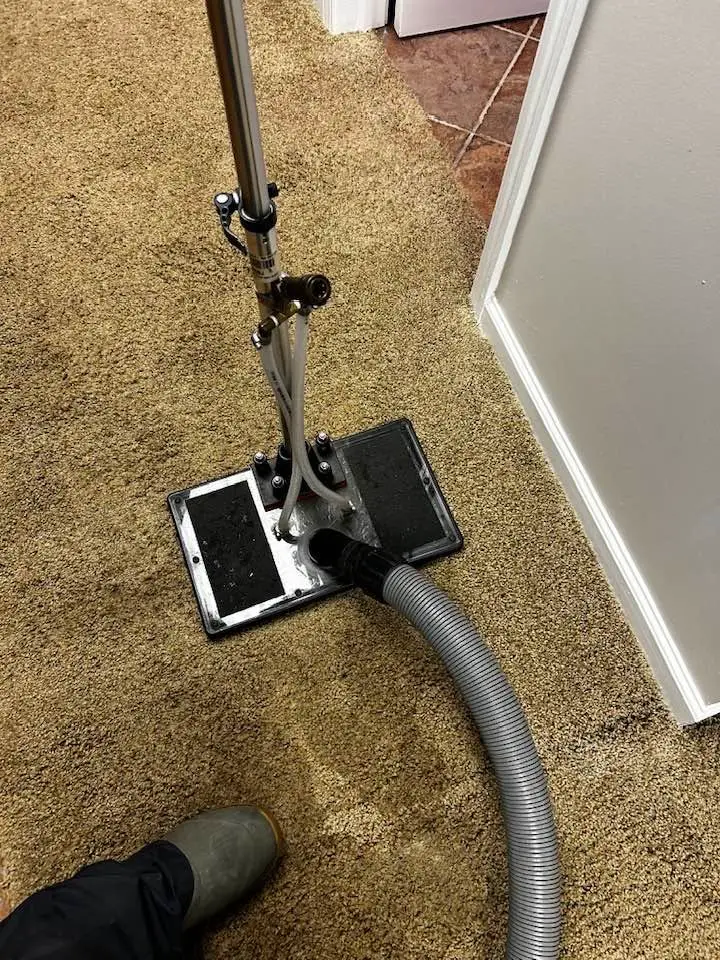
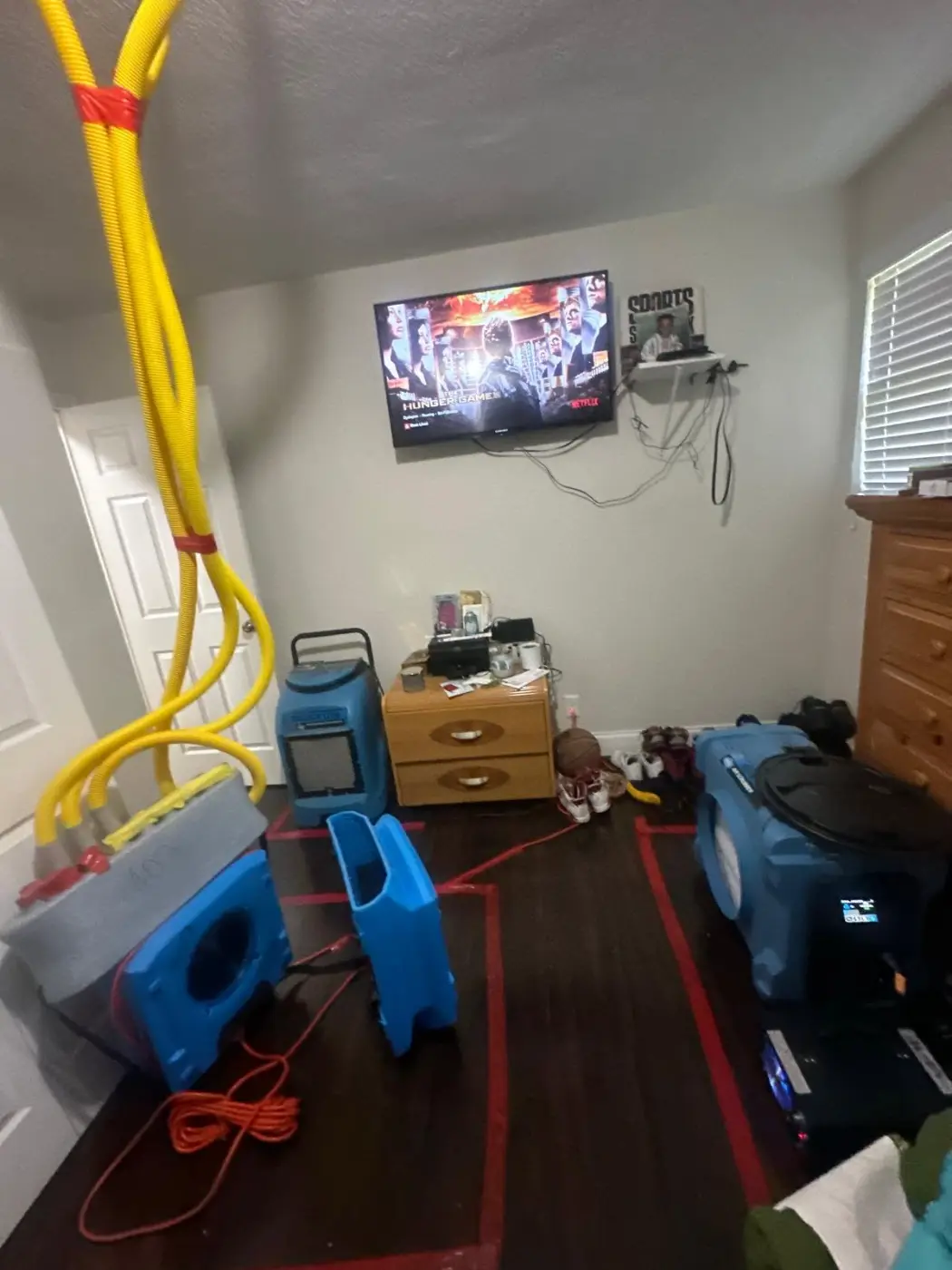
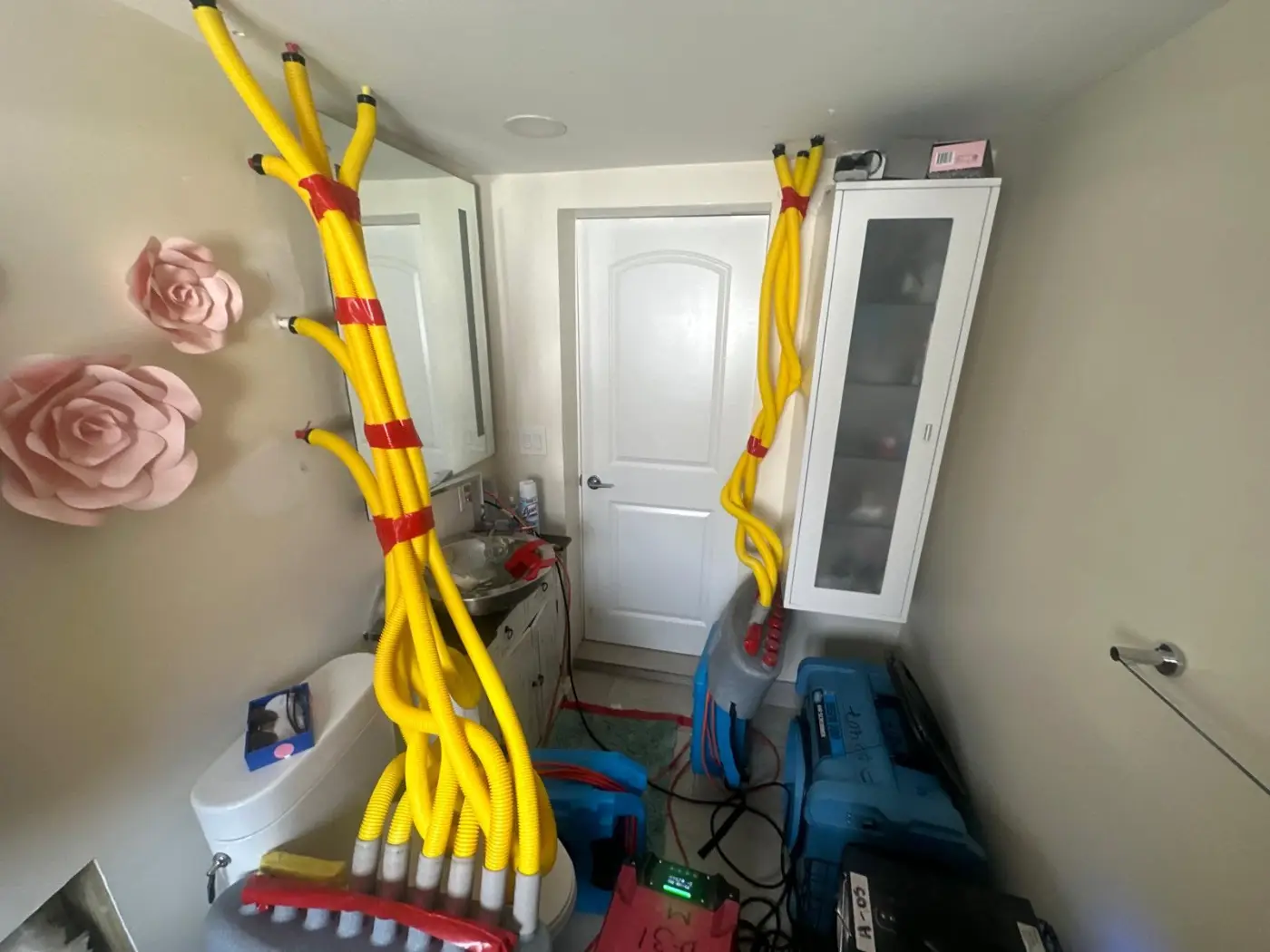
Together these map the edges of the wet area, so drywall is cut only where it has to be and drying equipment is placed where it does the most good. The ceiling and drywall water damage page covers what happens next.
Why hidden damage matters
A leak that runs for weeks can rot the bottom plate of a wall, delaminate subfloor, ruin insulation and grow mold on the back of the drywall. It also tends to be treated differently from sudden damage by insurers, which is covered in does homeowners insurance cover water damage. The earlier it is found, the less has to be removed.
Older Charleston homes are more prone to it
Many homes in the East End, the West Side and Kanawha City were built in the first half of the 1900s or just after the war. Original galvanized supply pipe corrodes from the inside and tends to fail at threaded joints inside walls. Plaster walls also hide water longer than drywall, because plaster does not stain or sag as quickly. If your home has older plumbing, it is worth checking the meter test above once or twice a year.
What to do if you find it
Shut off the water to the affected fixture or the whole house, photograph the signs, and have the area checked. If the damage is recent, drying can often save the framing and subfloor. If it has been going on for a while, expect some drywall and insulation removal, and possibly mold remediation. For anything involving standing water, start with what to do immediately after water damage.
Call now and our team can check it with moisture meters.
Hidden water damage FAQs
Can a thermal camera see through walls?
No. It reads surface temperature. Wet areas behind drywall often show as cooler spots, which tells a technician where to take moisture readings.
How long can a hidden leak go unnoticed?
Weeks or months. Drain leaks that only run during showers and slow drips onto subfloors are often found only when flooring lifts or mold smell appears.
Is a small ceiling stain worth checking?
Yes, especially if it grows or comes back after painting. It usually means water is still reaching the drywall from above.