The short answer
Right after water damage: stop the water at the main shutoff, cut power to wet rooms if you can do it safely, keep people away from contaminated water, move what you can to a dry place, photograph everything, and get the water extracted. Drying, repairs and paperwork all come after the water is out.
Water damage is a chain of events. Water leaves a pipe, appliance or the outside ground, soaks into the materials it touches, and then keeps moving: down into subfloors, sideways into wall cavities and up into drywall by wicking. Every step below is about breaking that chain as early as possible.
Step 1: Stop the source
If the water is coming from your plumbing, close the main shutoff valve. In most Charleston homes it is where the water line enters the house: a basement wall, a crawl space, a utility closet or beside the water heater. Turn it clockwise until it stops. A leak from a single toilet, sink or washing machine can be stopped at the small valve behind that fixture.
If the main will not turn, the meter shutoff near the street will stop the supply, though it may need a meter key. If the water is coming from outside, such as runoff or rising floodwater, you cannot stop it, so move straight to safety.
Do this today, not during a leakFind your main shutoff, make sure it turns, and show everyone in the house where it is. Old gate valves often seize after years without use.
Step 2: Make the house electrically safe
Water and electricity are the biggest danger in the first hour.
- Turn off power to the wet rooms at the breaker panel, but only if you can reach it without standing in water.
- If water is near the panel, outlets or appliances and you cannot get to the breakers safely, stay out and call the power company.
- Do not plug in or unplug anything while standing on a wet floor.
- Have gas appliances, such as a water heater or furnace, checked before relighting them if water reached them.
Step 3: Decide whether the water is clean or contaminated
The source of the water changes what is safe to touch. Restoration professionals sort water into three categories under the IICRC S500 standard.
| Category | Typical source | What it means for you |
|---|---|---|
| 1, clean | Supply line, faucet, water heater | Safe to handle, but it degrades within a day or two |
| 2, gray | Washing machine, dishwasher, toilet overflow without waste | Wear gloves; some materials will need cleaning or removal |
| 3, black | Sewage, river or creek floodwater | Keep children and pets out; porous materials are usually removed |
Clean water does not stay clean. After a day or two in carpet and drywall it picks up bacteria and is treated as gray water, which is one more reason to start early.
Step 4: Protect people and belongings
- Stay out of rooms where the ceiling is sagging or bulging. Wet drywall is heavy and can fall without warning.
- Move rugs, electronics, papers, photographs and valuables to a dry floor.
- Put aluminum foil or wood blocks under furniture legs so stain and rust do not transfer into wet carpet.
- Pin draperies and bed skirts up off the floor.
- Open cabinet doors and drawers in wet rooms so they can air out.
Step 5: Photograph everything
Before anything is moved or thrown away, take photos and video of the water source, water lines on walls and furniture, every affected room from several angles, and damaged belongings, including model and serial numbers. Keep any failed part, such as a split supply hose. Good records help plan the work and help with any claim later.
Step 6: Get the water out and drying started
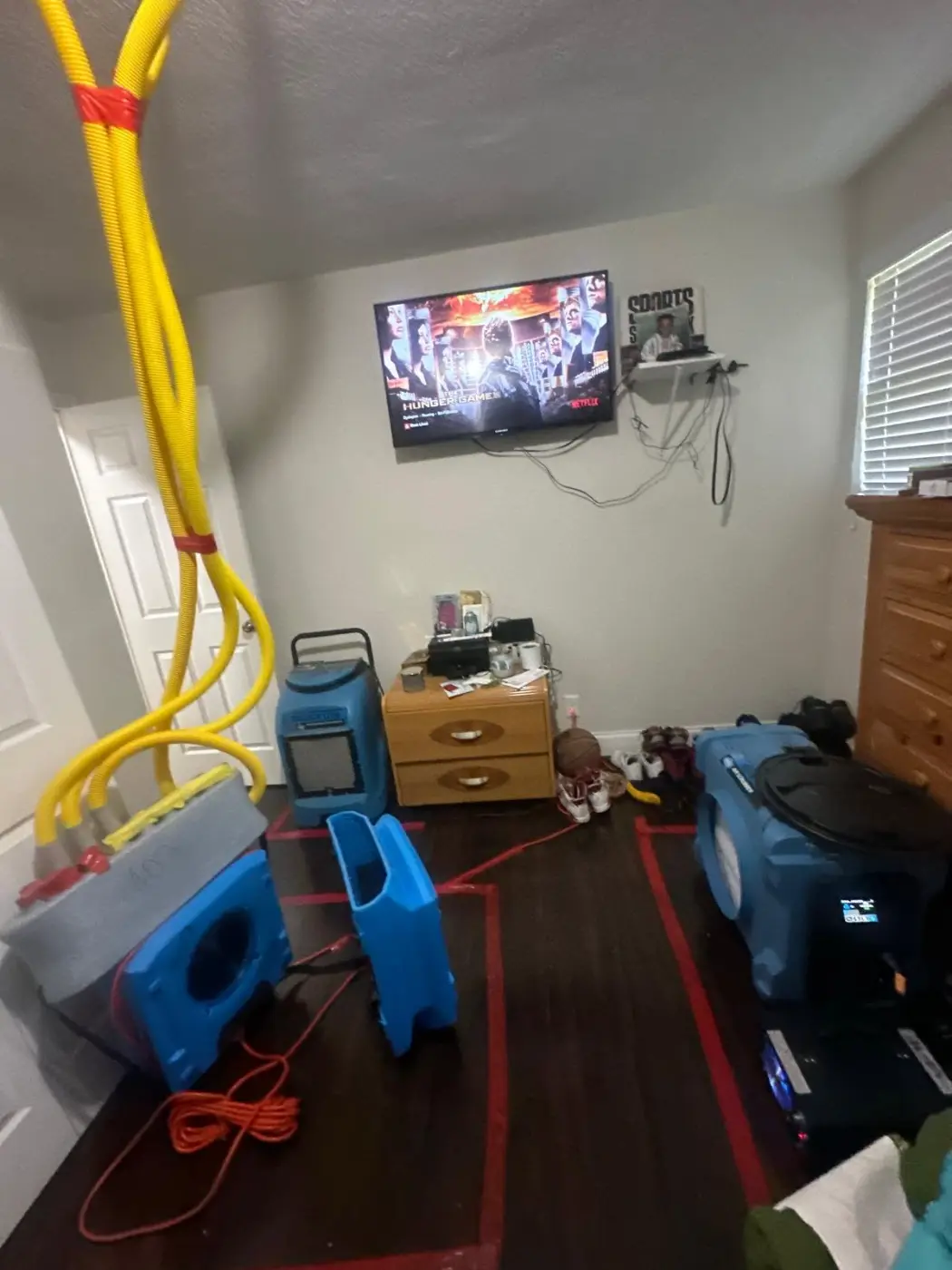
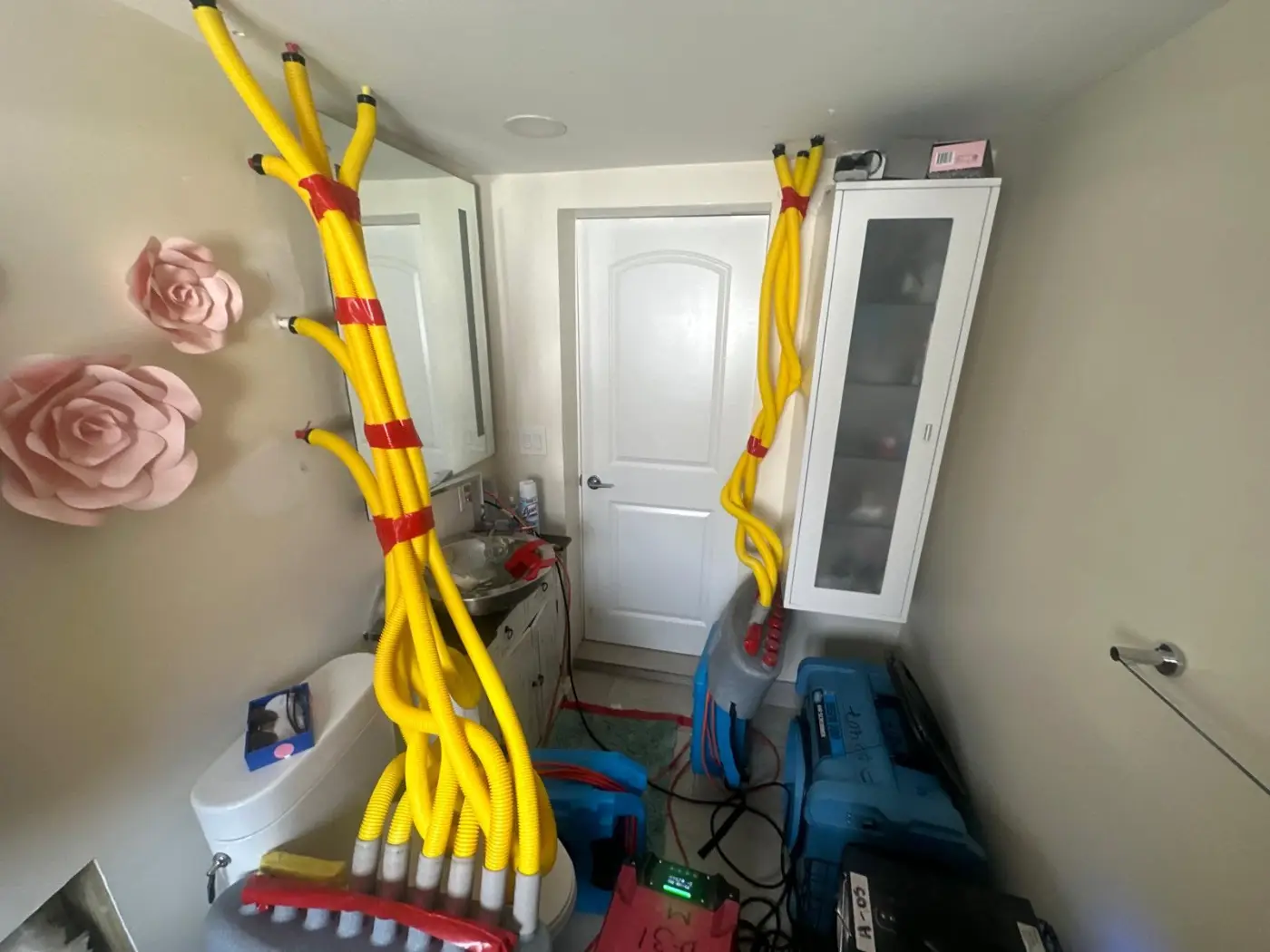
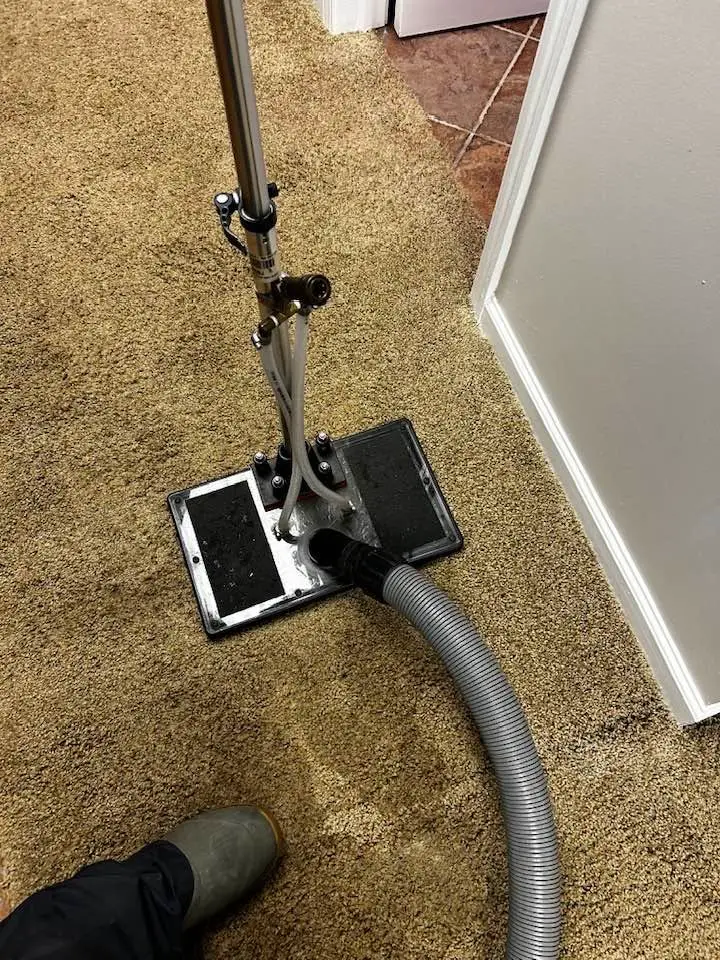
Towels and box fans cannot remove water from carpet pad, subfloors or wall cavities. Professional emergency water removal uses pumps and extraction units to pull out standing and absorbed water, then air movers and dehumidifiers dry the structure while moisture readings are taken each day. The full process is explained on the water damage restoration page.
- Minutes 0 to 15Stop the water and make the area electrically safe.
- Minutes 15 to 30Move people, pets and valuables away from the water.
- Minutes 30 to 45Photograph and video the damage before anything is moved.
- Minutes 45 to 60Call to get extraction and drying scheduled.
What not to do
| Don’t | Why |
|---|---|
| Use a household vacuum on standing water | It is not built for water and can shock you |
| Turn on the HVAC if water reached ducts or the air handler | It can spread moisture and contamination through the house |
| Wait to see if it dries on its own | Hidden moisture in walls and subfloors can lead to mold within 24 to 48 hours |
| Paint, patch or reinstall flooring early | Sealing in moisture causes mold, odor and stains later |
| Throw out damaged items before photographing them | You lose the record of what was damaged |
What happens after the first hour
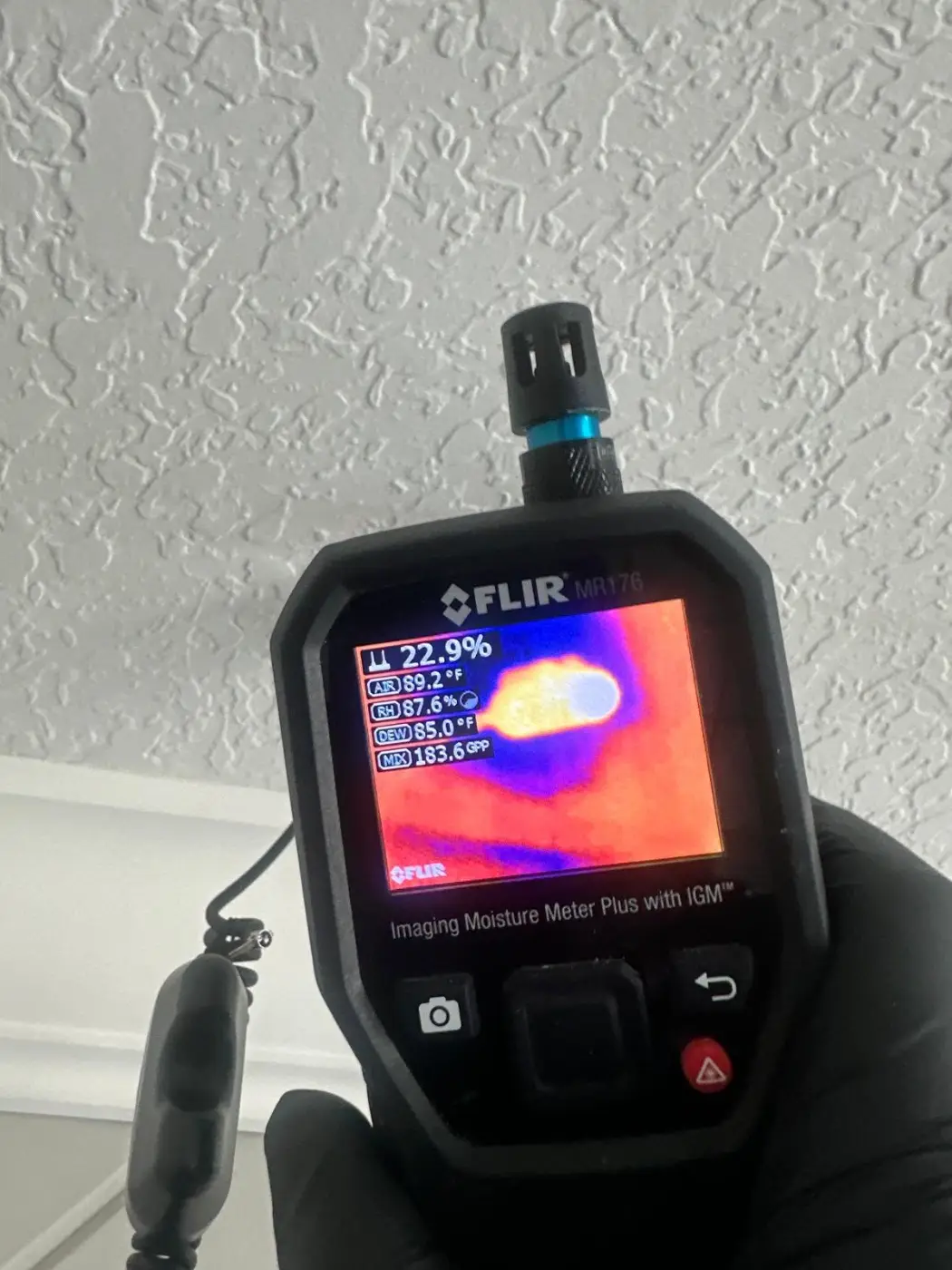
Once the water is out, the work moves from emergency response to drying. A technician maps moisture with meters and a thermal camera, removes materials that cannot be dried, and sets up equipment sized to the rooms. Our guide on how long water damage restoration takes covers the timeline, and how structural drying works explains why the equipment stays for days.
If you are not sure whether there is more water than you can see, read how to identify hidden water damage behind walls.
Call now and our team can start extraction.
First-hour FAQs
Should I call for extraction or my insurance company first?
Stop the water and make the house safe, then call for extraction so drying can start, then report the loss. Insurers generally expect you to prevent further damage and do not ask you to wait for an adjuster before water is removed.
Can a leak wait until morning?
Shut off the water right away. Extraction can sometimes wait a few hours for a small, clean-water leak, but every hour lets water move further into floors and walls.
Is it safe to stay in the house?
Usually, after a clean-water leak once power to wet areas is off. After sewage or floodwater, or if a ceiling is sagging, stay out of the affected rooms until they are cleaned and checked.